Wähle Zeitzone
Die Zeitzone Ihres Profils:
|
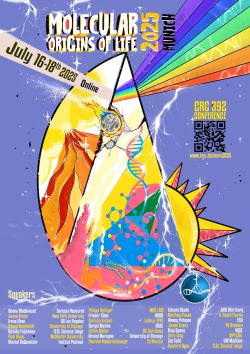
How did life emerge? The Molecular Origins of Life, Munich conference brings together leading scientists from diverse disciplines—including astrophysics, biochemistry, biophysics, chemistry, geosciences, and theoretical physics—to explore this fundamental question. This year, the conference will be held online, featuring expert talks accompanied by meet the speaker slots and virtual poster sessions. It provides a unique opportunity for researchers to exchange ideas, foster collaborations, and engage with the international Origins of Life community. The Molecular Origins of Life, Munich 2025 is organized and sponsored by the DFG funded Collaborative Research Center 392 Molecular Evolution in Prebiotic Environments and the attendance to the event is free of charge. |
 |
📌 Registration is required:
Registration as well as poster submission for the conference will open on May 15th, 2025, on the Fourwaves platform.
Please follow this link: Registration/Submission MOM 2025
Philipp Holliger, PhD,
Program Leader / Head of PNAC division
MRC Laboratory of Molecular Biology, Cambridge Biomedical Campus, Francis Crick Avenue, Cambridge CB2 0QH, UK
email: ph1@mrc-lmb.cam.ac.uk
A critical event in the origin of life is thought to have been the emergence of an RNA molecule capable of self-replication as well as mutation, and hence evolution towards ever more efficient replication. Although this ancestral replicase appears to have been lost, key aspects of RNA-catalyzed RNA replication can be studied “by proxy” with the use of modern RNA enzymes (ribozymes) generated by in vitro evolution.
Starting from the original RNA polymerase ribozyme (RPR) [1] we have evolved RPRs that are capable of the templated synthesis of another simple ribozyme [2] or long (> 200 nt), unstructured RNA oligomers [3]. However, none of these RPRs was capable of self-replication.
In this talk I’ll describe the more recent engineering and de novo discovery of RPRs that utilize trinucleotide triphosphates as their main substrates. This unlocks the copying of even highly structured RNA templates and enables non-canonical reverse and primer-free replication modes [4] and - in the case of a recently discovered small RPR - the templated synthesis of its own (+) and (-) strands, an important step towards self-replication [5].
I’ll also be discussing how structured media such as the eutectic phase of water ice - as well as coupled pH / freeze-thaw cycles [6] – can aid RPR function and enable the replication of double-stranded RNAs over many cycles.
[1] Johnston WK, Unrau PJ, Lawrence MS, Glasner ME & Bartel DP (2001) RNA-Catalyzed RNA Polymerization: Accurate and General RNA-Templated Primer Extension. Science 292, 1319-1325.
[2] Wochner A, Attwater J, Coulson A & Holliger P (2011) Ribozyme-catalyzed transcription of an active ribozyme. Science 332, 209-212.
[3] Attwater J, Wochner A & Holliger P (2013) In-ice evolution of RNA polymerase ribozyme activity. Nature Chem 5, 1011-1018.
[4] Attwater J, Raguram A, Morgunov AS, Gianni E & Holliger P (2018) Ribozyme-catalysed RNA synthesis using triplet building blocks. eLife, 7: e35255
[5] Gianni E, Kwok SLY, Wan CJK, Goeij K, Clifton BE, Attwater J & Holliger P (2024) A polymerase ribozyme that can synthesize both itself and its complementary strand. bioRxiv; doi: https://doi.org/10.1101/2024.10.11.617851
[6] Attwater J, Augustin T, Curran JF, Kwok SLY, Gianni E & Holliger P (2025) Trinucleotide substrates under pH–freeze–thaw cycles enable open-ended exponential RNA replication by a polymerase ribozyme. Nature Chem. https://doi.org/10.1038/s41557-025-01830-y
The cell membrane organizes and protects life in its role as a responsive interface and selective barrier. Lipids, the fatty amphiphilic molecules that make up the membrane bilayer, are central to membrane function. But we have no idea why cells tightly regulate the synthesis of hundreds of membrane lipids when one lipid is enough to form a bilayer. What is all that complexity good for? What role did it play in the origin and evolution of cells? And can we understand how to harness lipid diversity to engineer membranes for synthetic life? The combination of lipid structures that make up a membrane determines its physical properties, which ultimately influence membrane function and cellular fitness. So, while one lipid can form a membrane, more than one lipid is required to build a membrane that can optimize its properties to physiological and environmental demands. We've established genomically minimal bacterial systems—notably pathogenic mycoplasma and the Minimal Cell (JCVI-syn3B)—as modifiable membrane platforms. This approach allows us to tune and minimize their lipidomes, demonstrating that two lipids are sufficient (but far from optimal) for life. Using these minimal bacterial organisms, we can reintroduce genomic and chemical complexity to elucidate the crucial components of a functional cell membrane. Ultimately, our goal is to understand how the material properties essential for life are genomically encoded—so that we can reconstruct their evolutionary origins and design programmable membranes for synthetic life.
T-Y Dora Tang
Department of Synthetic Biology, University of Saarland, Campus B2.2., Saarbrucken, 66123, Saarland, Germany.
Coacervates provide a plausible route to primitive compartmentalisation. It has been proposed that coacervates, can serve as a compartment to host prebiotic reactions during the Origin of Life [1]. There has been progress in uncovering new chemical routes to the synthesis of key biological molecules and metabolites. In parallel, it is well established that key biological molecules and metabolites can form coacervates. Despite this there has been little focus on the effect of molecular flux on coacervate properties.
Here, we focus on coupling compartmentalisation with reactions and show how molecular flux can tune the material properties of the dispersion and the phenotype of coacervate droplets. Our systems are primary examples of minimal active matter that are regulated by molecular flux.
[1] Oparin, A. I. The Origin of Life. 1938 New York. NY: Dover Publications (transl. with annotations by S. Morgulis Macmillan republished in 1953, 1965 and 2003).
The polymerization of modified nucleoside triphosphates (dNTPs) represents a versatile chemoenzymatic method for the introduction of chemical diversity into nucleic acids. These analogs have been employed in a variety of applications including functional tagging of oligonucleotides, formation of hydrogels, and de novo DNA synthesis. dNTPs also represent convenient vectors to expand the chemical diversity of oligonucleotide-based libraries in SELEX experiments for the generation of functional nucleic acids (i.e. catalysts and binders) with enhanced properties. In addition, dN*TPs equipped with suitable, transient 3’-protecting groups represent alluring synthons for controlled enzymatic synthesis of nucleic which in turn is used for the preparation of large amounts of oligonucleotides with view on storing digital information in DNA.
Here, I would like to summarize our recent efforts towards the synthesis of modified nucleoside triphosphates and their application in chemical biology. In a first section of this presentation, the recent identification of chemically modified aptamers will be presented (1, 2). A broad palette of chemical modifications can be used to promote binding activity and crystal structural analysis provide valuable information on the binding mechanism and the exact effect of these modifications on binding. The second part of this presentation will highlight our recent efforts towards the development of chemoenzymatic methods to produce modified oligonucleotides. This represents an unmet challenge in the field of aptamers and therapeutic oligonucleotides. We are currently exploring various approaches including the polymerization of transiently blocked nucleoside triphosphates by polymerases (3, 4) as well as ligation of short oligonucleotide fragments (5). We have also explored similar strategies to decorate oligonucleotides with triantennary GalNAc ligands which are key elements in therapeutic strategies to enhance specific delivery of nucleic acid drugs (6).
The formation of organophosphates is a critical step in the origin of life on the earth. While several routes to phosphorylation have been identified many rely on soluble phosphates. I present here a new approach to phosphorylation that relies upon reduced oxidation state phosphorus compounds (phosphite and its dimer, pyrophosphite), reacting with ammonia to produce P-N compounds. These P-N compounds are capable of phosphorylating several nucleosides with ease, and suggest an expanded inventory of phosphorylation on the early earth.
The RNA World hypothesis of how life may have emerged on the early Earth relies on a dual role for RNA: propagating (proto)genetic information, and carrying out functions in the form of ribozymes. Such an RNA-based genotype-phenotype system could not have emerged spontaneously, and would have required a mechanism for RNA replication before the emergence of any enzymatic activities. This lecture will present recent results that show how the nonenzymatic copying of random templates—an essential requirement for any emergent replication process—may have appeared. These experiments use next-generation sequencing to probe the copying reaction at the highest level of detail, and incorporate prebiotically plausible nucleotide activation chemistry and realistic mixtures of heterogeneous reactants. We will also consider the implications of these results for the development of more complex model experiments for RNA replication.
The single chirality of the amino acids and sugars that make up the building blocks
of life has fascinated scientists and laymen alike since Pasteur’s first painstaking
separation of the enantiomorphic crystals of a tartrate salt over 150 years ago.
Autocatalytic self-replication has been highlighted as a potential route to
rationalize how one enantiomer might have come to dominate over the other from
what presumably was a racemic prebiotic world. Frank’s theoretical
demonstration of this concept has to date been verified in only one case, the
prebiotically implausible Soai reaction. We recently demonstrated how two
reactions, the dipeptide-catalyzed transamination to produce enantioenriched
amino acids, and the thiol-catalyzed ligation of amino acids to produce dipeptides,
might be combined to produce a prebiotically plausible network for chiral
amplification.
Photochemistry is important for prebiotic synthesis on early Earth and early Mars. Formaldehyde (HCHO) has been known to be produced via CO by the UV chemistry of CO2 atmosphere, though the HCHO is not an only product. Our systematic experiments demonstrated that various organic compounds (aldehydes, sugars, sugar acids, hydroxy acids, keto acids, dicarboxylic acids and fatty acids) are produced by solar-like UV irradiation to CO and H2O without no obvious catalyst. Furthermore, the product mixture reacts with ammonia to form amino acids, imidazole and its derivatives. The bottleneck to yield various types of the molecues is three aldehydes (HCHO, (CHO)2, and CH3CHO: Troika) produced from CO in gas phase reaction.
This talk will provide a comprehensive overview of the field of photochemistry, illustrating differences from classical (ground state) organic chemistry through various examples. It will give a closer look at the interactions of small organic molecules with light, excited states and their potential to drive prebiotic chemistry in a specific and selective manner. State-of-the-art measurement techniques will be presented together with examples from current research.
The tree of life (TOL) is a powerful framework to depict the evolutionary history of cellular organisms through time, from the last universal common ancestor, LUCA, to extant archaea, bacteria and eukaryotes shaping biodiversity on Earth today.
During the past decades, our perception of the TOL has fundamentally changed in part due to profound methodological advances which allowed a more objective approach to study organismal diversity and led to the discovery of major new branches in the TOL. For example, single cell and metagenomics approaches to reconstruct genomes of uncultivated microorganisms, has enabled the generation of a wealth of genomic data of previously unknown microbial such as the ubiquitous and diverse symbiotic DPANN archaea and CPR bacteria as well as shed new insights into the origin of the eukaryotic cell from a symbiosis between an Asgardarchaeon and alphaproteobacterial partner.
In this talk, I will present aspects of our research that have contributed to new key insights into the divergence of archaea and bacteria, the placement of genome-reduced symbionts in the TOL and the timing of major evolutionary transitions including the origin of the eukaryotic cell.
Engineering synthetic cells from non-living components allows us to explore and reimagine cellular functions beyond what we observe in natural systems. As the capabilities of individual synthetic cells are still limited, quick and reliable transmission of signals could help to distribute tasks, just like the division of labor between cells in multicellular organisms. In this talk, I will present our efforts in engineering communication and the formation of spatiotemporal patterns in communities of synthetic cells. For this purpose, we developed synthetic cells with porous membranes that communicate through diffusive RNA and protein signals to influence gene expression in their neighbors. Cell mimics can be assembled into large diffusively connected two-dimensional communities, and perfused with fresh reagents to maintain non-equilibrium conditions. Using this system, we demonstrated signal transmission through a trigger wave of gene expression that, upon local activation of an autocatalytic gene circuit, propagates several millimeters, across thousands of cell mimics.
The aqueous alteration of ultramafic rocks, i.e. serpentinization, generates molecular hydrogen, a process of keen interest in origins of life research. While active submarine serpentinization systems like the Lost City hydrothermal vent field are often considered analogues for serpentinization systems on early Earth, significant differences in modern and ancient seawater chemistry and reactant rock compositions (komatiite vs. peridotite) suggest distinct reaction pathways, rates, and hydrogen formation potentials, as well as distinct chimney mineralogies. In this presentation, I will explore how compositional variations control hydrogen formation during serpentinization and discuss implications for reactions relevant to prebiotic chemistry on early Earth.
The early evolution of life must have gone through a stage where catalytic RNAs (ribozymes) provided many functions that are today fulfilled by proteins. This idea is supported by the requirement of the ribosome (a catalytic RNA) for the synthesis of proteins in all known life forms, by the abundance of nucleotide-based cofactors, and by the ability of RNAs to catalyze a broad spectrum of chemical reactions. We have used in vitro selection experiments for ribozymes to answer how such an early stage of life could have looked like. This talk will describe two such projects, one on the development of a GTP synthase ribozyme (here the focus is on a ribozyme-based metabolism) and the other on the selection of catalytic oligonucleotide complexes (here the focus is on the minimal information of catalytic systems). I hope to convey that there must have been many stages in the early evolution of life between prebiotic chemistry and life's invention of the ribosome.
Mechanisms to increase chemical selectivity would be important in the prebiotic RNA world. We studied the activity of self-aminoacylating ribozymes for six different amino acid substrates. Ribozyme activity was positively correlated with specificity, indicating that natural selection for increased activity would also lead to increased specificity, as an evolutionary by-product. Another prebiotic mechanism influencing the RNA world would be the selective permeability of protocell membranes. While the selectivity across a single membrane might be modest, multiple lamellae could amplify this effect. A theoretical model indicates that the protocell interior could be substantially enriched in a multilamellar vesicle. These results demonstrate simple mechanisms to increase chemical selection without specialized biochemical machinery.
Prebiotic synthesis of complex organic molecules in water-rich environments remains a challenge. However, recent observations of liquid CO₂ in the deep sea suggest the presence of benthic CO₂ pools, prompting a new hypothesis that a liquid/supercritical CO₂ (ScCO₂)-water two-phase system could enable condensation reactions by mimicking dry conditions. To test this, we conducted nucleoside phosphorylation reactions in hydrothermal reactor simulating this environment. As a result various phosphorylated products including nucleoside monophosphates (5’-NMPs, 3’-NMPs, etc), nucleoside diphosphates, and carbamoyl nucleosides—were formed, especially with the addition of urea, which enhanced 5'-NMP yields above 10%. No phosphorylation occurred in a purely aqueous system, confirming the role of ScCO₂. Visual observation with a glass window reactor revealed water migration into the ScCO₂ phase, mimicking the drying effect seen in wet-dry cycles on land. Additionally, carbonate saturated acidic aqueous phase enabled phosphate release from hydroxyapatite at milimolar order, addressing the phosphate problem on early Earth. These findings suggest that ScCO₂-water interfaces, potentially present in deep-sea environments and on other ocean worlds, could support prebiotic phosphorylation and broader organic condensation reactions.
Takumi Okuda, Claudia Höbartner*
A variety of RNA modifications, collectively known as epitranscriptome, have been discovered across all classes of RNA, with over 150 distinct types identified in modern organisms. Among these modifications, methylation is the most abundant and simplest modification, carried out by enzymes using the ubiquitous methyl donor S-adenosylmethionine (SAM). In ribosomes,ancient molecular fossils of naturally occurring ribozymes, multiple methylations have been shown to improve translational accuracy and efficiency. Similarly, in synthetic ribozymes, site-specific methylation of the catalytic core has been demonstrated to dramatically boost their catalytic activity [1]. These examples underscore that RNA modification provides a plausible explanation for how RNA has enhanced their functionality in RNA world. To explore this concept, we examined the possibility of RNA-catalyzed RNA modification and successfully discovered SAM-dependent methyltransferase ribozymes that mimic the methylation mechanism of modern organisms [2]. The target ribozyme was evolved from a chemically synthesized library of 1015 different RNA sequences using a propargylic cofactor ProSeDMA, which mimics the SAM structure with four atomic mutations and transfers a “clickable” tag. Our selection strategy revealed a ribozyme that transfers the click-tag and we subsequently screened for candidates that also tolerate natural SAM. Active sequences were selectively enriched after click reaction, leading to the discovery of a new ribozyme named SAMURI (SAM analogue Utilizing Ribozyme). SAMURI exhibited high catalytic activity for selective transfer of click tags to target RNA and also accepted native SAM as a cofactor. The crystal structure of SAMURI was solved at a resolution of 2.9 Å after multiple optimizations of sequence constructs [3]. The structure revealed a unique architecture of the catalytic core that consisted of four individual layers orienting the transferred alkyl group in front of the target adenosine. These findings demonstrate that RNA-catalyzed RNA methylation could have occurred in the RNA world, potentially using SAM in a manner reminiscent of the modern epitranscriptome.
References: [1] C.P.M. Scheitl, C. Höbartner et al. Nat Chem Biol., 2022, 18, 547-555. [2] Okuda, T., Lenz, A.K., Seitz, F., Vogel, J., Höbartner, C. Nat. Chem., 2023, 15, 1523-1531. [3] Chen, H-A., Okuda, T., Lenz, A.K., Scheitl, C.P.M., Schindelin, H., Höbartner, C. Nat Chem Biol., 2025, doi:10.1038/s41589-024-01808-w
One of the most fascinating questions arising from studies of our planet, and of the wider Universe, is the origin of life on Earth. There are two main hypotheses describing the source of the organic compounds that could have served as the basis of life: the formation of prebiotic molecules under the conditions assumed to have existed on the primitive Earth; and their formation in the Solar Nebula or in its parent molecular cloud and delivery to Earth via comets, asteroids and their meteoritic remains.
In my talk, I will discuss evidence supporting the exogenous hypothesis for the origin of life on Earth. This evidence comes from remote observations of astrophysical environments, data from space missions to comets and asteroids, analysis of extraterrestrial samples, and data from laboratory experiments and models simulating physico-chemical processes in astrophysical environments. Three main points will be highlighted: (i) many precursors of prebiotic molecules have been detected in astrophysical environments; (ii) prebiotic molecules have been identified in comets, asteroids, and meteorites; and (iii) experimental and modeling results demonstrate that the generation of prebiotic species under astrophysical conditions is possible and reveal potential reaction pathways. To conclude, I will touch on the big questions, remaining challenges, and opportunities for interdisciplinary collaboration.
RNA replication can occur inside lipid vesicles driven by activated nucleotides entering through the membrane. We study this using computational models. A metabolism is an autocatalytic reaction that maintains itself in a non-equilibrium state inside a cell while the outside environment remains inactive. We call this requirement inside-outside stability. We demonstrate that some forms of autocatalytic reactions satisfy this requirement, but we do not know of real small-molecule chemical systems that fit these reaction schemes. However, we show that templating of RNA oligomers in a protocell satisfies the required stability conditions. Hence RNA replication is itself a metabolism, and we do not need another (hypothetical) metabolism to drive RNA replication. Base sequences arising in oligomer templating tend to collapse into simple patterns with short repeats such as the combination of poly-A plus poly-U, or repeated AU, or many others. We identify all possible patterns that can exist and show that transitions occur from patterned states to random sequences as the error rate is increased. Patterns can be described as irreducible sets of short words that allow continued synthesis of the same words without creating words not in the set. If we begin with an oligomer mixture that encodes a desired sequence (e.g. a ribozyme), the sequence information is usually lost due to a scrambling process that creates sequences not originally present. Sequence information is only retained if the original sequence is an irreducible set that does not scramble. Even if the error rate is zero or very small, scrambling occurs for most initial sequences, followed by collapse of the sequences to a irreducible set with a short repeat pattern. If the error rate is larger, sequences simply become randomized. These constraints make it very unlikely that a mixture of oligomers replicating non-enzymatically could encode sequences long enough to be functional ribozymes.
Life’s defining characteristics such as information storage, replication, and catalysis pose a fundamental puzzle in the origin-of-life research. Here, we advance a theoretical framework showing how a pool of initially random heteropolymers, undergoing nonenzymatic, template-assisted replication under cyclic environmental changes, can spontaneously acquire catalytic function. Our recently published eLife study [1] demonstrates, through a mathematical model, that sequence-specific cleavage activity can emerge and become selectively advantageous. Even minimal spontaneous cleavage generates primer fragments that enhance replication, setting the stage for the emergence of functional catalysis. When catalytic cleavage increases the rate over spontaneous background by a factor of approximately 1,000, cooperative networks of four interdependent oligomer subpopulations can arise and outperform noncatalytic chains. Inspired by hammerhead ribozyme architectures, the study explores the phase space of catalytic efficiency and elongation asymmetry, revealing selection pressures that further drive catalytic enhancement. This mechanism provides a plausible route from simple mutual templating to systems capable of both information transfer and primitive enzymatic activity, linking "information-first" scenarios to the emergence of function.
This study extends our earlier works that theoretically predicted [2,3] and experimentally verified [4] the emergence of long polymers from random pools and the subsequent spontaneous reduction of their sequence entropy.
References:
[1] Tkachenko AV, Maslov S. Emergence of catalytic function in prebiotic information coding polymers. eLife 12, RP91397 (2024). https://doi.org/10.7554/eLife.91397.3
[2] Tkachenko AV, Maslov S. Spontaneous emergence of autocatalytic information coding polymers. J Chem Phys 143, 045102 (2015). https://doi.org/10.1063/1.4922545
[3] Tkachenko AV, Maslov S. Onset of natural selection in autocatalytic heteropolymers. J Chem Phys 149, 134901 (2018). https://doi.org/10.1063/1.5048488
[4] Kudella PW, Tkachenko AV, Salditt A, Maslov S, Braun D. Structured sequences emerge from random pool when replicated by templated ligation. PNAS 118, e2018830118 (2021). https://doi.org/10.1073/pnas.2018830118
UV light has been postulated as a potential energy source for driving prebiotic chemistry on the early Earth. Here, we investigate the influence of UV light on nucelobases/sides and further study the interactions of UV light and lipid vesicles. It has been suggested previously that the canonical nucleobases used by life today may have been selected due to their enhanced photostability, based on the evidence from their excited state lifetimes (Beckstead et al. 2016). Here, we test the degradation rates of various canonical and non-canonical nucleobases and nucleosides under continuous UV irradiation to determine their relative photostabilities. We further test if encapsulation by lipid membranes can help protect UV sensitive molecules from photodegradation. When a UV photon impinges upon a lipid protocell, the photon could either be absorbed, scattered, or transmitted to the interior. Here, we attempt to understand if encapsulation inside lipid protocells could provide any protective effect. We probe the influence of parameters including lipid composition and size of the protocells. From these efforts, we can improve our understanding of the potential role of UV light in various aspects of prebiotic chemistry.
Beckstead et al. (2016) Phys Chem Chem Phys, 18, 24228-24238.