Wähle Zeitzone
Die Zeitzone Ihres Profils:
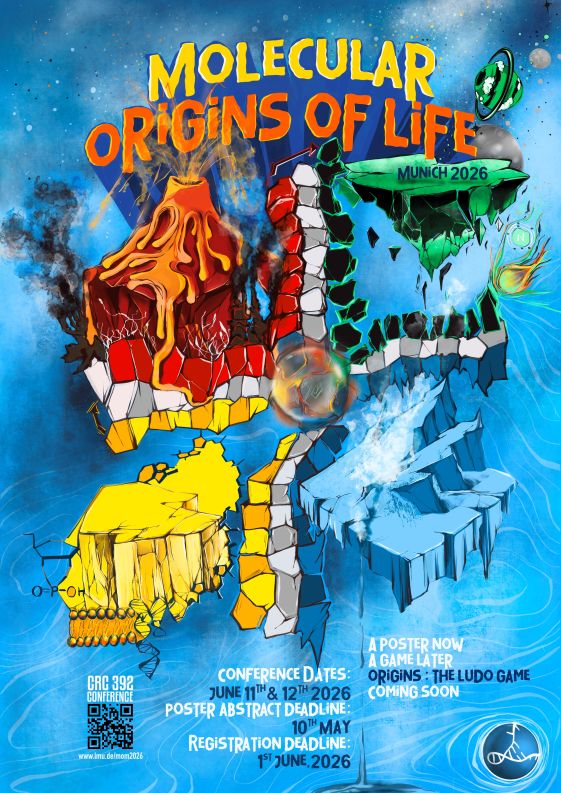 Molecular Origins of Life, Munich (MOM 2026) explores one of science’s most fundamental questions: How did life begin?
Featuring talks by leading international researchers, alongside panel discussions and poster sessions, MOM 2026 brings together scientists across disciplines. From astronomy, biochemistry, biophysics, geosciences, to theoretical chemistry and physics, we share ideas and push the field forward.
Topics include:
Early Earth environments and the conditions that enabled prebiotic chemistry
Chemical systems that may have preceded living systems
The emergence of genetic materials and metabolic pathways
How Darwinian evolution could arise from non-living chemistry
MOM 2026 aims to present and discuss the latest research, highlight recent advances, and foster interdisciplinary collaboration toward understanding life’s molecular beginnings.
The Molecular Origins of Life Munich 2026 is organized by DFG funded Collaborative Research Center 392 Molecular Evolution in Prebiotic Environments.
Attendance to the event is free of charge.
Registration is mandatory to be able to attend the event.
MOM 2026 will take place in person only. There will be no hybrid or online participation option.
Christa Schleper
The question about the emergence of complex life forms on Earth remains one of the big mysteries in evolution and is directly linked to the origin of life, because shortly after the formation of LUCA (the last universal common ancestor) there was a deep split into two major branches, the Bacteria and Archaea. For about 2 billion years, both these groups evolved and diversified and were the only inhabitants on our planet until the first complex, eukaryotic cells evolved. Newest models converge on a symbiosis or a merger, between a bacterium and an archaeon that led to the formation of the first complex cell with organelles.
The hypothesis is fueled by the recent discovery of Asgard Archaea.
Genomic studies of these archaea and then recent cultivation of living strains shed light on the closest known prokaryotic relatives of eukaryotes. They reveal unexpected cellular complexities, including cell morphology but also cellular dynamics.
The findings support that an Asgard archaeon was likely the host for the (alpha-) proteobacterial endosymbiont in this crucial event of early evolution that gave rise to all complex life forms.
Philippe Nghe
Understanding how Darwinian selection emerged in prebiotic systems remains a central challenge in origins-of-life research. In this talk, I will present an experimental model of RNA-based coacervate protocells in which compartment survival is directly coupled to internal ribozyme activity. Using an autocatalytic ribozyme, we show that RNA-catalyzed elongation reactions modify the polymer length distribution inside coacervates, thereby altering their physicochemical stability under dehydration. The protocells display differential survival, leading to exclusion of less stable populations. Additionally, surviving compartments grow and preserve their molecular identity during rewetting, a necessary condition for heredity. Together, these results demonstrate a minimal physicochemical mechanism for compartment-level natural selection of RNA reactions, paving the way for evolution by natural selection in the RNA world.
Roland Riek
Life is a complex phenomenon resulting from dynamic and multifaceted interactions among various molecules, primarily nucleic acids, proteins, and lipids. Here, the chemical evolution to life is explored under the hypothesis of the interplay between peptide amyloids, nucleic acids and fatty acid membranes. Peptide amyloids, with their repetitive structure composed of intermolecular β‐strands, present thereby an interesting candidate for the first replicative chemical entity with biological potential. Their minimal requirements concerning amino acid composition and peptide length, combined with unique properties such as exceptional stability and catalytic activity, make them highly relevant in this context. Another key feature of amyloids is their ability to serve as templates for Amyloids can act as chemical templates in ligating shorter peptide fragments, including self‐correction facilitated by the cross‐β fold. In addition, the repetitive structure of the amyloid is able to serve increased activities through avidity and cooperativity with other repetitive molecules such as RNA and fatty acid vesicles, which also builds the basis for catalytic activities such as ATP synthesis from ADP and activated phosphate.
Paul Rimmer
Prebiotic chemistry often begins with a desired product such as a nucleotide, an amino acid, a metabolic intermediate, and then seeks its production from geochemically plausible starting conditions. However, there is a range of plausible conditions for aqueous chemistry on early Earth, with a variety of pH's and temperatures, as well as light, various salts, and minerals. With such variety, it can be a challenge to constrain how much of a molecule is available for prebiotic experiments, let alone how a group of molecules would actually behave in a natural environment. Product-driven chemistry shows us what is possible; kinetics is needed to inform where this chemistry is possible, how long it lasts, and what else happens at the same time.
Cyanide is a useful seed molecule for prebiotic chemistry, but it degrades in water. Its survival in water allows us to determine an upper limit on its lifetime. I will show measured cyanide hydrolysis rates in pure water and water with a range of salts over 60–100°C and pH 4–12, and used a Bayesian Arrhenius analysis to extrapolate cyanide lifetimes down to 0°C across a wide range of plausible aqueous environments. These rates connect atmospheric or hydrothermal cyanide production to the maximum cyanide available in lakes, rivers, and ponds, as well as a range of formamide concentrations, suggesting where, if anywhere, formamide-rich solvents might arise naturally.
I will then show how this chemistry can be modelled using SOUP, an aqueous prebiotic chemical kinetics model. I will show how this model helps inform new work on ferrocyanide reformation from its photoaquated product. With these experiments and models, we aim to learn what chemical system each environment can produce. Some environments may have the right seeds for prebiotic chemistry, along with the right range of conditions for those seeds to grow into something that more closely resembles a living system. It may well be that most seeds fail to thrive in most environments. Failed harvests may leave behind the clearest signatures of their chemical causes.
Anton S. Petrov (a,b*), Claudia Alvarez-Carreno (a,c), Loren Dean Williams (a,b), Mark A. Ditzler (d)
a NASA Center for the Origins of Life, Georgia Institute of Technology, Atlanta, GA, USA
b School of Chemistry and Biochemistry Georgia Institute of Technology, 315 Ferst Drive NW, Atlanta, GA, USA
c Department of Structural and Molecular Biology, University College London, London, United Kingdom
d Center for the Emergence of Life, NASA Ames Research Center, Moffett Field, California, USA
Translation is carried out by the most conserved assemblies in biology. Among these assemblies, the ribosome and RNase P are central players. These ancient ribonucleoprotein complexes achieved structural and functional maturity by the last universal common ancestor (LUCA) of life. In prior work, we reconstructed the evolutionary history of the ribosome using its three-dimensional structure, based on accretion and molecular fingerprints that date back to life's earliest stages. I will present an extension of our structural phylogenetic framework - based on the accretion model - to RNase P, a ribonucleoprotein responsible for processing pre-tRNAs. By sampling RNase P RNA (RPR) sequences and structures across phylogeny and partitioning them into RNA fragments based on insertion fingerprints, we characterized the state of RNase P at LUCA and reconstructed the chronology of its evolution. I will discuss how application of the accretion model requires correct secondary structures, and was successful for RPR only when the traditional secondary structure was corrected by reorganizing a pseudoknot. The chronology revealed that RNase P, like the ribosome, accreted modular RNA elements over evolution, while preserving the structure of pre-existing elements, thus maintaining a structural record. We used interactions with tRNA to link and unify the evolutionary trajectories of RPR and rRNA. These results support the view that RNase P and the ribosome co-evolved as part of a functionally integrated system. Finally, I will demonstrate that the ancestral catalytic sites of rRNA and RPR formed by the same process — the fusion of two stem-elbow-stem elements. The analysis of these two co-evolving RNAs also suggests that some of their accreted elements share common ancestry.
Cathleen Zeymer
Center for Functional Protein Assemblies, TUM School of Natural Sciences, Technical University of Munich (TUM), Germany
Metal ions are powerful catalysts. They serve as versatile cofactors in modern metalloenzymes, but likely also played an essential role at the origin of life. Small peptides binding the available metal ions may have substantially broadened the catalytic repertoire of the prebiotic world, for instance by mediating the formation of functional molecular assemblies, promoting Lewis acid activation of substrates, and even photoredox chemistry. Our work focusses on the 4f elements, or lanthanides, which have been added only recently to the list of enzymatic metal cofactors found in nature. We have developed a luminescence-based assay to screen libraries of peptides or proteins to identify potent lanthanide binders (1). A selection of short peptides containing only prebiotic amino acids has been tested for their ability to modulate RNA hydrolysis and ligation in the presence of lanthanide ions. Furthermore, we have developed artificial lanthanide-dependent photoredox enzymes (PhotoLanZymes). These de novo designed catalysts promote radical carbon-carbon bond cleavages upon visible-light irradiation (2). Computational protein design and directed evolution were combined to obtain enantioselective enzymes variants (3). Overall, the talk will highlight the catalytic potential of lanthanide-binding peptides and proteins for various types of chemistries.
(1) R. Klassen, A. Heider, H. Kugler, M. Groll, C. Zeymer, "A Luminescence-Based Screening Platform for Lanthanide-Binding Peptides and Proteins" ACS Chemical Biology 2025, 20, 2897-2906. https://doi.org/10.1021/acschembio.5c00670
(2) A. S. Klein, F. Leiss-Maier, R. Mühlhofer, B. Boesen, G. Mustafa, H. Kugler, C. Zeymer, "A De Novo Metalloenzyme for Cerium Photoredox Catalysis" J. Am. Chem. Soc. 2024, 146, 25976-25985. https://doi.org/10.1021/jacs.4c04618
(3) F. Leiss-Maier, J. Behringer, G. Mustafa, A. Heider, R. Mühlhofer, A. S. S. Klein, M. Groll, C. Zeymer, "Computational redesign and directed evolution of a lanthanide-dependent photoredox enzyme for enantioselective diol cleavage" Chem. Sci. 2026, accepted. https://doi.org/10.1039/D5SC08010J
Dina Grohmann
Recent research has established archaea as the closest known relatives of eukaryotes and thus central to understanding the origin of complex life. Often thriving in extreme or chemically unusual environments, archaea provide insight into how life persists under conditions resembling early Earth [1,2] and how the first complex cellular systems may have evolved. In this talk, I focus on two molecular aspects that illuminate this transition.
(1) The rRNA modification landscape of hyperthermophilic archaea:
Systematic comparison of hyperthermophilic and mesophilic archaea with bacteria and eukaryotes revealed that nearly 50% of RNA modifications in extreme hyperthermophiles are temperature‑dependent and induced at high temperatures via temperature‑regulated enzymes. These rRNA modifications are required for growth at elevated temperatures, and cryo‑EM analyses of ribosomes from wild‑type and enzyme‑deficient strains show that they stabilize ribosomal structure through recurrent interactions [3]. Together, dynamic rRNA modifications are a key contributor to robust information processing in extreme environments and suggest a potential role in RNA‑world chemistry on early Earth.
(2) Unique archaeal membrane chemistry and behaviour:
Archaeal membranes are built from ether lipids, fundamentally distinct from the ester lipids of bacteria and eukaryotes. In hyperthermophiles, membrane‑spanning tetraether lipids support survival at extreme temperatures. Yet, the biophysical properties of archaeal membranes have remained poorly understood. We characterized the lipid compositions of four hyperthermophilic archaea and established them as in vitro model membranes. Their composition governs membrane fluidity and phase behavior and strongly differentiates archaeal membranes from bacterial ones. We further observed a tendency for archaeal giant unilamellar vesicles to form tubular and multilamellar structures, pointing to a high capacity for membrane remodelling and adaptation. These in vitro findings are supported by in vivo data: for one of the model archaea, we discovered an unusual cell‑division cycle, in which an ESCRT‑III cytokinetic ring repeatedly constricts the inner membrane to generate multiple daughter cells within a shared periplasm; the outer membrane then ruptures, releasing daughters that reestablish the parental architecture through membrane duplication.
Together, these findings suggest that archaea may have provided molecular innovations that helped pave the way for the emergence of complex life.
References:
1. Helmbrecht V, Reichelt R, Grohmann D, Orsi WD. Simulated early Earth geochemistry fuels a hydrogen-dependent primordial metabolism. Nat Ecol Evol. 2025, doi: 10.1038/s41559-025-02676-w.
2. Grünberger F, Schmid G, El Ahmad Z, Fenk M, Vogl K, Reichelt R, Hausner W, Urlaub H, Lenz C, Grohmann D. Uncovering the temporal dynamics and regulatory networks of thermal stress response in a hyperthermophile using transcriptomics and proteomics. mBio. 2023. doi: 10.1128/mbio.02174-23.
3. Garcia-Campos MA, Georgeson J, Nir R, Reichelt R, Fluke KA, Matzov D, Iyer V, Burkhart BW, Lui L, Kustanovich A, Grünberger F, Gamage ST, Howpay S, Gerovac M, Alexandre N, Nobe Y, Nowak YS, Glatt S, Jona G, Ferreira-Cerca S, Vogel J, Taoka M, Meier J, Westhof E, Santangelo TJ, Grohmann D, Shalev-Benami M#, Schwartz S# . Pan-modification profiling facilitates a cross-evolutionary dissection of the thermoregulated ribosomal epitranscriptome. Cell. 2025. doi: 10.1016/j.cell.2025.09.014
Barbara Ercolano
Polycyclic aromatic hydrocarbons (PAHs) are a pervasive component of astrophysical environments and represent a key reservoir of carbon in planetary systems. In this talk, I will present our efforts in understanding PAH formation, processing, and chemical impact in protoplanetary discs and planetary atmospheres, drawing on recent advances in coupled thermo-chemical and radiative transfer modelling.
I will show how stellar irradiation, atmospheric structure, and composition regulate PAH abundances, charge states, and size distributions across a wide range of environments. These properties, in turn, influence both the thermal balance and the broader chemical networks of atmospheres, with implications for observable signatures and atmospheric evolution.
Within this framework, I will discuss how aromatic species may contribute to the emergence of chemical complexity by acting as intermediates or catalytic platforms for the formation of more complex organic molecules. I will briefly highlight ongoing ab initio efforts that explore reaction pathways involving smaller nitrogen-bearing heteroaromatic ring systems (e.g. pyrimidine-like molecules) as computationally tractable proxies for more complex aromatic species. These calculations suggest that key prebiotic molecules, such as nucleobases, can form through exothermic gas-phase reactions with simple interstellar species, with quantum tunnelling likely playing an important role at low temperatures.
Taken together, these results point towards a scenario in which PAHs are not only tracers of carbon chemistry, but active participants in the chemical evolution of planetary environments. I will conclude by discussing how upcoming observations can test these ideas and constrain the role of aromatic chemistry in setting the stage for prebiotic processes beyond Earth.
Klaus Paschek
The emergence of life on Earth required reducing conditions; however, the geological record suggests an early oxidizing atmosphere. How, then, was the primordial soup prepared? How can the Miller-Urey experiment be saved? We address these questions by extending a photochemical model of the Hadean atmosphere to evaluate the impact of different sources of reducing gases. These sources include volcanic serpentinization and the bombardment of enstatite and carbonaceous meteorites during the Late Veneer. By coupling this model with a wet-dry cycling model, we can estimate the concentrations of key prebiotic molecules in Darwinian ponds on early Earth. Our results demonstrate that a CO₂-rich atmosphere can be reduced by global serpentinization alone. This yields key building blocks of life at millimolar concentrations in the modeled ponds. These concentration levels are sufficient for nucleotide synthesis, producing the monomers of RNA. These findings suggest that RNA could have emerged soon after Earth became habitable and/or reappeared later during the Hadean-Archean transition.
Reference:
Paschek, K., Henning, T. K., Molaverdikhani, K., Miyazaki, Y., Pearce, B. K. D., Pudritz, R. E., Semenov, D. A. 2025, The Astrophysical Journal, 985, 50, doi: 10.3847/1538-4357/adc39b
Bénédicte Ménez
Institut de physique du globe de Paris, Université Paris Cité, France
Geogenic molecular hydrogen (H2), produced through water-rock reactions, is a persistent and widespread source of reducing power in Earth’s lithosphere. In the presence of inorganic carbon, H2 can promote the abiotic synthesis of organic compounds. Yet, the mechanisms controlling the diversity, spatial distribution, and evolution of these compounds in natural settings remain poorly understood, limiting our understanding of how lithosphere-derived H₂ may have contributed to the emergence of life and the establishment of the first metabolisms on the early Earth.
Here, we investigate how geodynamics-driven fluid circulation and rock-forming minerals regulate coupled H2–carbon chemistry using a multimodal approach combining ultrahigh-resolution mass spectrometry and microscale imaging. Focusing on deep subsurface environments, including active and ancient hydrothermal systems along ocean ridges as well as subduction zones, we reveal chemically diverse and spatially structured organic assemblages displaying pronounced microscale heterogeneity and intimate associations with mineral phases.
Our observations provide direct evidence from natural systems—beyond laboratory experiments and numerical models—that minerals locally govern not only H₂ generation but also the formation, transformation, and preservation of organic compounds. Rather than acting as passive substrates, minerals and organics appear to co-evolve during fluid–rock interactions and metamorphic processes, with changing redox conditions and water-rock ratios driving increasing molecular complexity over time.
We propose that these mineral-guided processes generate a sustained endogenous reservoir of reduced carbon in the deep subsurface, largely decoupled from surface-derived inputs. Together, these findings portray the lithosphere as a self-sustained reactive environment in which mineral-driven H₂ production and organic synthesis can support microbial ecosystems. More broadly, they point to a mineral-controlled “dark” hydrogen and carbon cycle with profound implications for the emergence, persistence, and distribution of life in the deep Earth and beyond.
Scott R. Sammons and Derek K. O’Flaherty
A central challenge in origins-of-life research is to elucidate how primitive genetic polymers could have replicated and propagated nonenzymatically before the advent of macromolecular catalysts. Nucleosides and nucleotides are considered to be essential for the emergence of life, rendering their prebiotically plausible synthesis of fundamental importance. Several potentially prebiotic pathways have been demonstrated for the formation of genetic polymers, such as RNA, DNA, threose nucleic acids (TNA), and arabinose nucleic acids (ANA). Here, we report a potentially prebiotic route to 3′-amino-3′-deoxy-2-thiocytidine starting from simple feedstock molecules. Although the key intermediate, 3′-amino-ribose-aminooxazoline, undergoes degradation over the period of days, as previously observed, we demonstrate that cyanovinyl protection via cyanoacetylene treatment suppresses the byproduct formation and enables the successful synthesis of the 3′-amino-3′-deoxy-anhydrocytidine intermediate. We further show that the cyanovinyl protecting group is compatible with thiolysis at the 2-position and is concurrently removed during this process. Finally, I will discuss pathways to activate certain amino-nucleotides in order to perform chemical copying chemistry. These findings support the hypothesis that 3′-amino-modified ribonucleotides could have existed, and carried out useful chemistry, under prebiotic conditions on early Earth.
Sheref Mansy
In modern biology, many of the most ancient catalytic processes rely on metal coordination, particularly iron–sulfur clusters bound to short, metal-binding motifs within the active sites of enzymes. This suggests that metal–ligand chemistry played a key role prior to the emergence of enzymes. Here, I will highlight how environmental conditions can drive selection and organization in prebiotic systems. First, we find that that all major classes of biologically relevant iron–sulfur clusters can form spontaneously under prebiotically plausible aqueous conditions when simple peptides encounter iron and sulfide ions. The type of cluster formed is largely dictated by the ratio of iron and sulfide. We additionally demonstrate that ultraviolet (UV) radiation, a dominant surface energy source on the early Earth, plays a major role in the types of peptides that survive. This is because metal binding protects against photolysis. Together, these results suggest that physical and geochemical constraints alone can bias prebiotic chemistry toward metal-centered, proto-catalytic structures, providing a natural bridge between unregulated chemistry and the emergence of metabolism-like systems.
Bettina Scheu
The sparse preservation of early Archean rock records leaves Earth’s earliest geological environments poorly constrained and their suitability for prebiotic chemical evolution largely speculative. Identifying plausible setting(s) for the emergence of life therefore remains one of the central challenges in origins research.
Many promising candidate settings are intrinsically linked to volcanic activity, which shaped the early planetary surface while driving elemental recycling and transport between Earth’s interior, crust, hydrosphere, and atmosphere. Volcanic systems also generate persistent physical and chemical disequilibria that promote fluid–rock interactions, including leaching, precipitation, and remineralization, thereby creating chemically reactive niches favorable for prebiotic processes.
Modern volcanic terrains such as Iceland provide valuable natural analogues for investigating such environments. Extensive basaltic volcanism, active hydrothermal systems, geysers and silica sinters, fluid circulation through fresh volcanic substrates, and pronounced thermal and chemical gradients make Iceland an exceptional field laboratory for studying geologically driven prebiotic reactions. However, modern analogues remain limited by fundamental differences between present-day Earth and the early Archean, including atmospheric composition, ocean chemistry, biological overprint, and planetary heat flux. Laboratory experiments under controlled (geochemical) conditions therefore provide an essential complementary approach to bridge this gap.
Combining Icelandic field analogues with experimental simulations offers a means to better constrain the range, dynamics, and habitability of volcanically driven environments that may have supported prebiotic chemistry during life’s emergence.
Furkan Ozturk
Electron spin couples strongly to molecular chirality through the recently discovered phenomenon of chiral-induced spin selectivity. As such, spin-polarized magnetic surfaces, such as magnetite, can function as robust chiral reagents and facilitate asymmetric processes on early Earth’s environments. I will discuss recent experiments that exploit the strong coupling between electron spin and molecular chirality, as well as explain their relation to life’s homochirality - one of the grandest challenges in origin-of-life research since Pasteur’s discovery of molecular chirality more than 175 years ago.
Elizabeth A. Bell, UCLA
Earth’s rock record grows increasingly sparse with age, and the most ancient existing rocks have mostly undergone metamorphism to varying degrees, altering some aspects of their original mineralogy, morphology, or composition. This is a major complicating factor in the search for the earliest evidence of life, as well as the earliest evidence for Earth’s environmental conditions. Although the widely agreed upon oldest extant rock is 4.03 billion years old (‘Ga’), the chemically and physically robust mineral zircon (ZrSiO4) can provide U-Pb geochronological and other information about this early crust. Zircon older than 4.03 Ga has been discovered at 15 locations around the planet, although the vast majority studied so far come from a handful of sites. They extend the mineral record back to nearly 4.4 Ga and, despite appearing to largely derive from magmas, provide constraints on a number of environmental variables. Evidence for liquid water derives from both stable isotope and trace element compositions. Oxygen isotope evidence for low-temperature water-rock reactions is found as early as 4.3 Ga, with a small minority of the zircon population suggestive of origins via higher-temperature, hydrothermal reactions. Further evidence from silicon isotopes and several trace elements suggests some of the low-temperature water-rock reactions were likely related to subaerial weathering, suggesting the existence of a sediment cycle at the surface. Further examination of trace elements and ‘inclusions’ of other minerals in the zircon can help to further distinguish their source rocks, which may have been a mixture of mantle-like and continental-like sources and magmas melted from both earlier igneous rocks and sediments. Potential environments for early life that are suggested by the zircon data could range from low-temperature surface or near-surface aqueous settings (on either continental or oceanic crust) to hydrothermal systems, which host abundant life on the modern Earth. Future work on the early crust and early environments could involve both an expansion of the sites yielding >4 Ga zircon – which may turn up evidence for more diverse source rocks and environmental settings – and greater scrutiny of the mineral inclusions trapped in many of the >4 Ga zircons, which may yield their own isotopic and geochemical evidence for early Earth conditions and biotic remains.
Sudha Rajamani
The emergence of cellular life would have been a vital step during life’s origin and early evolution. This event would have been influenced by membrane evolution; a process that would have resulted in emergent properties in protocells/membrane-bound vesicles, which can be used as proxies for discerning how molecular evolution would have shaped early amphiphilic landscapes. We evaluated this in the context of an ‘interacting populations paradigm’, wherein distinct chemical compositions of single chain amphiphile (SCA)-based protocells were used to formulate unique protocellular "species" with different physicochemical properties and environmental fitness profiles. In this backdrop, we explored how protocell interactions could have resulted in emergent properties that conferred fitness benefits (functional advantages), sometimes to the system per se, under prebiotic settings. The empirical insights that we gleaned into the ‘evolution’ of membrane functionalities demonstrate how their inherent dynamicity, and the physicochemical diversity in the niche, could have fostered functional advantages in dynamically interacting protocell compartments. Importantly, this approach circumvents the risk of oversimplifying the ecological and chemical realities that would have been inherent in early Earth environments.
Sukrit Ranjan
UV light was the dominant source of chemical free energy to the surface of early Earth by three orders of magnitude, and its effects have been considered for nascent organic molecules (Deamer & Weber 2010). However, far less attention has been paid to the implications of this strong chemical forcing on the inorganic chemical species invoked by prebiotic chemistry as feedstock for synthesis of these organics to begin with. I will show how UV photolysis shapes availability of prebiotic chemistry precursor species, with emphasis on sulfur and nitrogen species invoked in diverse prebiotic syntheses, (e.g., Ducluzeau et al. 2009; Becker et al. 2019; Benner et al. 2019; Xu et al. 2020). For sulfur, I will present experimental results demonstrating that while thermal disproportionation of sulfite is slow, its photolysis is fast, efficiently converting volcanically outgassed sulfur to sulfate and restricting sulfite to trace concentrations in most prebiotic waters (Ranjan et al. 2023). For nitrogen, I will present similar results suggesting generally efficient photolysis of nitrate, with the caveat that nitrate photolysis may have been impeded in some waters (Ranjan et al. 2019; Schuler et al., in prep). While both species were generally rare on early Earth, we show that they could potentially have built up to prebiotically relevant quantities in shallow, closed-basin carbonate lakes. Excitingly, shallow closed-basin carbonate lakes are also predicted to have accumulated other key nutrients for prebiotic chemistry such as phosphate and nitriles, hinting towards a geologically self-consistent prebiotic chemistry (Toner & Catling 2019, 2020; Hurowitz et al. 2023). This is primarily because of the ability of such systems to evaporatively concentrate atmogenic species, and secondarily because of their ability to partially attenuate UV radiation. I will discuss the implications for proposed origin-of-life scenarios.
Jack Szostak
An organism’s genome encodes information about how to live in the world. This means information about the internal world, the organism itself, its structure, metabolism and its replication, but also information about the external world, how to sense and respond to it. The information that is coded in the genome is learned over evolutionary time as replication errors result in a random walk through sequence space, ruthlessly trimmed by natural selection. But how do you get a genome in the first place? How do you go from nothing to even a rudimentary genome? How might that primordial genome replicate before it had learned to encode any replication machinery? What barriers had to be overcome before the genome could begin to accumulate information, to learn and encode all of biochemistry? These are some of the issues that I will discuss.
Sara Seager
Scientists have speculated for over half a century that Venus might be habitable—not on its scorching surface, but in the much cooler cloud layer 48 to 60 km above the planet. The concept is that Venus’ perpetual cloud cover might host simple single-celled life, as Earth’s clouds do. The Venus clouds, however, are not made of water but are composed of concentrated sulfuric acid—an aggressive chemical that is toxic for Earth life. We have found that some key biomolecules—including amino acids, short peptides, and even a genetic-like polymer—can remain stable in concentrated sulfuric acid under Venus-like conditions. Some lipids are not only stable in concentrated sulfuric acid but also self-assemble into vesicle-like structures. These findings and others suggest that complex organic chemistry may be possible in Venus’ clouds and motivate the astrobiology-focused Morning Star Missions to Venus. Laboratory hardware development for Venus led us to a different topic: ionic liquids—exotic, non-volatile solvents that can remain stable under conditions where liquid water cannot exist. For the first time, we have shown that select ionic liquids can arise naturally from planetary materials. These results reinforce the idea that habitability may not be limited to water-rich worlds. By considering alternative solvents and extreme environments, we open new pathways for exploring how life might arise, persist, and be detected on planetary bodies far different from our own.
Lijun Zhou
The emergence of life requires a genetic system capable of information transfer, self-assembly, and heritable function. On Earth, RNA fulfills these requirements, forming the basis of the RNA World hypothesis. Alternative genetic polymers provide an opportunity to explore how changes in nucleic acid chemistry may influence properties relevant to molecular evolution.
In this talk, I will present recent progress on RNA analogues that support rapid nonenzymatic primer extension and molecular self-assembly while remaining compatible with in vitro evolution in the test tube. Although such systems may not necessarily be considered candidates for life on early Earth, they offer an opportunity to experimentally examine life-like behaviors in an abiotic setting. These studies may provide alternative models for investigating questions surrounding the RNA World and Darwinian evolution.
Sarah Maurer
The interplay between environment and protocells is assumed to be a driving force for chemical and early Darwinian evolution. However, the number of environmental and biological variables makes predicting protocell stability and functionality an unresolved challenge in understanding environment habitability for astrobiology. To address this challenge, we have applied lab automation combined with artificial intelligence to formulation chemistry for the origins of life. Specifically, we have built a foundation model (FM) to predict liposome formation from novel amphiphiles. The model relies on latent space vectors generated from SMILES representations of chemical structures coupled to extant data sets reflecting chemical properties, here as membrane formation. Our foundation model improved liposome formation prediction from a previous Gaussian process classifier model from 0.85 to 0.90 for our best latent space descriptors.
We also explored how environments impacted the function of the membranes by determining the CVC, liposome formation, and permeability. We tested these metrics under four pH conditions, with and without sea salt or sea salt mixed with organics. We also tested how changing the headgroups of some of our amphiphiles from phosphate to sulfate impacted membrane function. We found that permeability and CVC did not follow intuitive trends. Too, while environment influenced the metrics tested, we did not eliminate any environments for poor liposome formation or find an optimal environment for the liposome compositions tested. We found that dodecyl phosphate reduced both permeability and number of liposomes formed when compared to dodecyl sulfate, highlighting the importance of phosphate headgroups form membrane formation and function.
Moran Frenkel-Pinter a,b*
a Institute of Chemistry, The Hebrew University of Jerusalem, Israel 9190401
b The Center for Nanoscience and Nanotechnology, The Hebrew University of Jerusalem, Israel 9190401
One of the most fascinating mysteries in the field of origins of life concerns the driving force that led to the selection of today’s 20 universal L-alpha amino acids in biology.
An essential aspect of life's emergence involves the formation of compartments, which offer encapsulation for molecules and provide protection from hydrolysis in aqueous environments. Thus, polymers capable of assembly may have had a chemical evolutionary advantage over polymers that lacked this ability. We postulated that primordial peptide assembly could be one of the driving forces that led to the chemical selection of alpha amino acids in life today. To test this hypothesis, we generated depsipeptides, oligomers composed of ester bonds and peptide bonds that form readily under mild drying conditions, as model prebiotic peptides. However, it is unknown whether depsipeptides form assemblies in an aqueous environment similarly to peptides and proteins. To test the hypothesis that depsipeptides with alpha backbones will form assemblies more readily than beta backbones, we synthesized depsipeptides using a matrix of eight alpha- and beta- hydroxy acids and six alpha-, beta-, and gamma- amino acids. The reaction products were analyzed by microscopy and a physical stability analyzer to study assembly formation as well as various analytical techniques for chemical analysis. Our results demonstrate assembly formation in depsipeptide systems containing hydrophobic hydroxy acids and indicate that depsipeptide assemblies containing alpha hydroxy acid backbones are significantly more stable than beta analogs. Overall, our results offer an assembly-driven mode of selection for the alpha backbone in present-day biology.
Alena Khmelinskaia
Recent computational methods have been developed for designing novel protein assemblies with atomic-level accuracy. Yet, when compared to their natural counterparts, the structural and functional space covered by de novo designed assemblies remains limited. I will share with you our ongoing nature-inspired efforts in diversifying the structural repertoire of protein assemblies and developing strategies to dynamically control protein assembly state. First, I will describe our approaches to diversify assembly geometries beyond simple polyhedral geometries, such as linked architectures assembled from rigid building blocks following quasi-equivalence principles. Then, I will present our generalizable interface-seeded design pipeline for the generation of environemnt responsive oligomers driven by ion-mediate, small molecule-dependent or phosphorylation-triggered protein-protein interfaces. Finally, I will discuss our approach to the design miniaturized building-blocks capable of satisfying multiple structural and functional constraints. By leveraging novel architectures and a diversity of endogenous and exogenous signals, we aim to generate minimal orthogonal and programmable control elements for synthetic biology.