Cosmological Observables: Cambridge-LMU Cosmology Meeting
Ryle room
Kavli Cambridge
Building on previous meetings between cosmologists from Cambridge and Munich, this workshop brings together students, postdocs, and faculty to discuss recent progress and future directions in cosmology.
The scientific focus of the meeting will include:
- Large-scale structure (LSS)
- The cosmic microwave background (CMB)
- Early-Universe physics
- Cosmological tensions and beyond-ΛCDM models
- Statistical methods and simulation-based inference
The Cambridge–LMU Cosmology Partnership was established in 2017 and is supported by both universities. These workshops provide a regular platform for scientific discussion, exchange of ideas, and updates on joint research progress. They also offer an excellent opportunity for graduate students and early-career researchers to present short talks and engage with researchers from both institutions.
The event will be held in person in Cambridge. We look forward to welcoming you there.
Friday
To strengthen LMU–Cambridge connections, Friday will be reserved for open discussions.
Conference Dinner
TBD.
Transport to Cambridge
Trains from Munich to Cambridge via London are available on the DB website, either through Brussels or Paris.
The closest major airport to Cambridge is London Stansted Airport, which has direct train to Cambridge.
Participants arriving via London Heathrow Airport should travel by train to London King’s Cross station, and then take a train from King’s Cross to Cambridge.
Hotel Information
Turing Locke (promo code is LIVELOCKE): https://www.lockeliving.com/en/cambridge/turing-locke
Colleges: https://www.universityrooms.com/en-GB/city/cambridge/home/
Funds
Funding is available to support travel, accommodation, and per diem expenses for students, PhD students, postdocs, and staff.
Visa
Please note that traveling to the UK may require an electronic travel authorisation (ETA) or visa. Please visit the UK government website to find out whether you require an ETA or a visa, and apply for the ETA if relevant. (Note: many other websites offer ETAs at higher rates - it is highly recommended to use the link above).
If you are not eligible for an ETA but require a visa, please apply for the visa in a timely manner as visa evaluation procedures may take long.
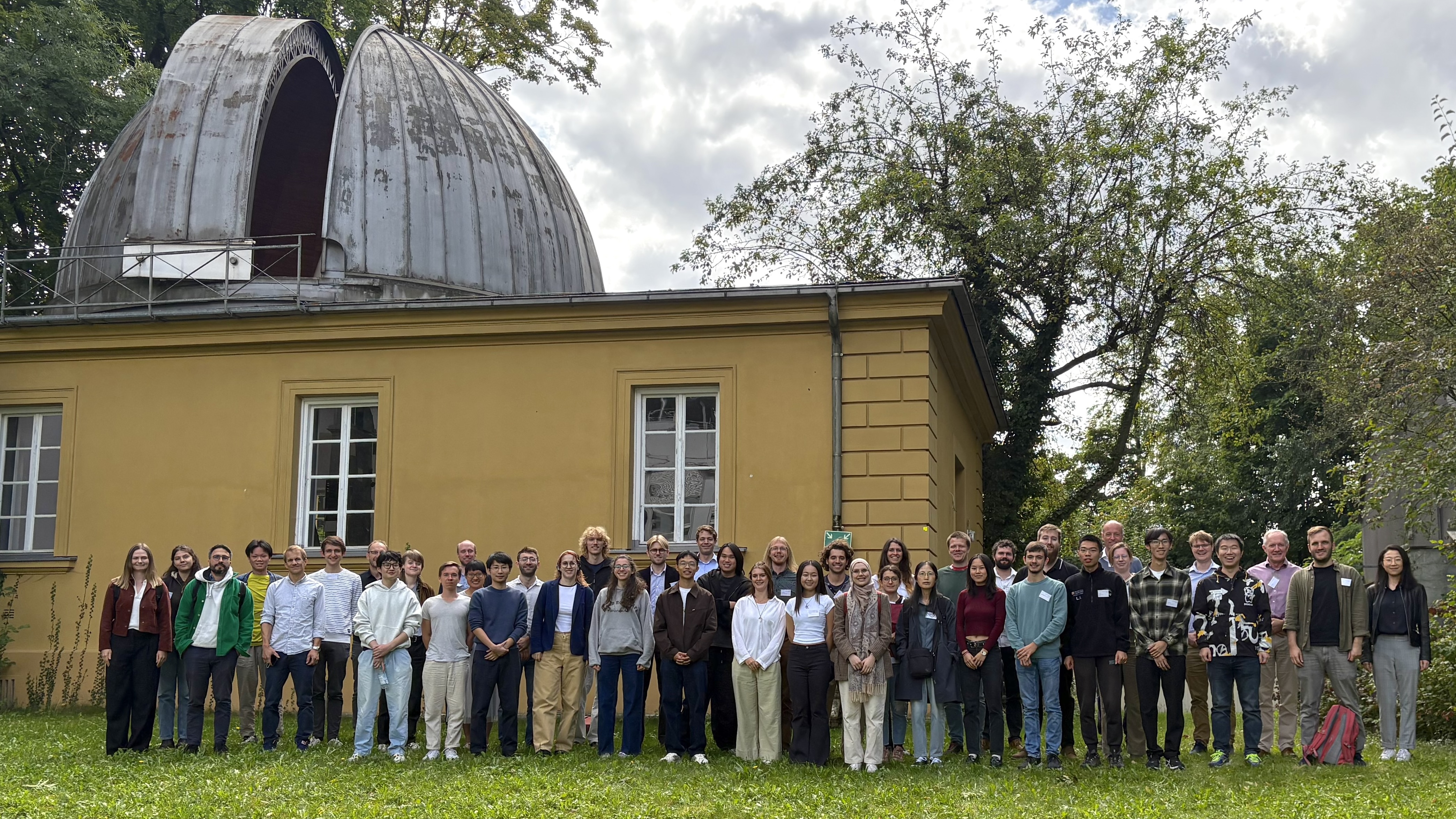
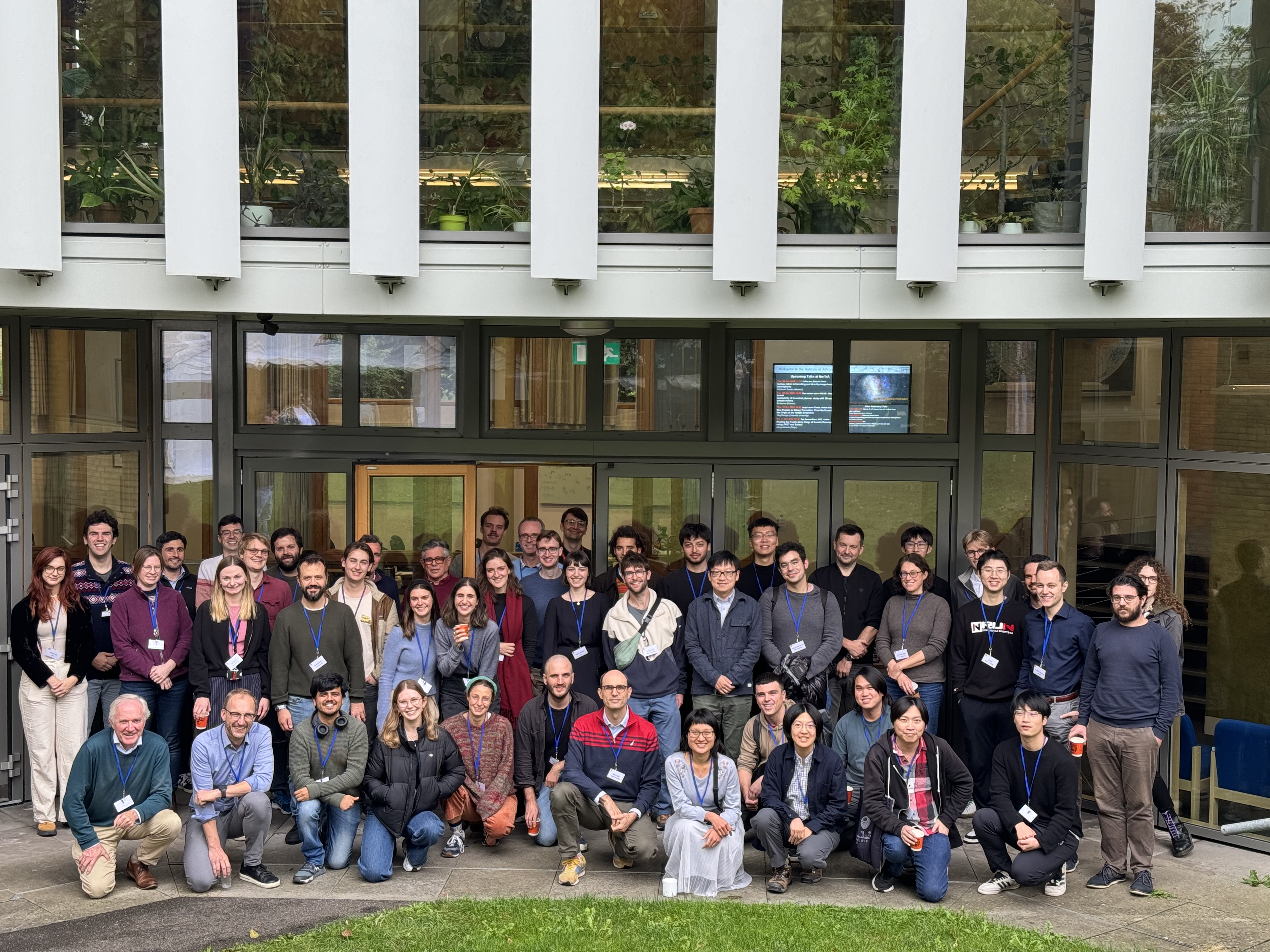
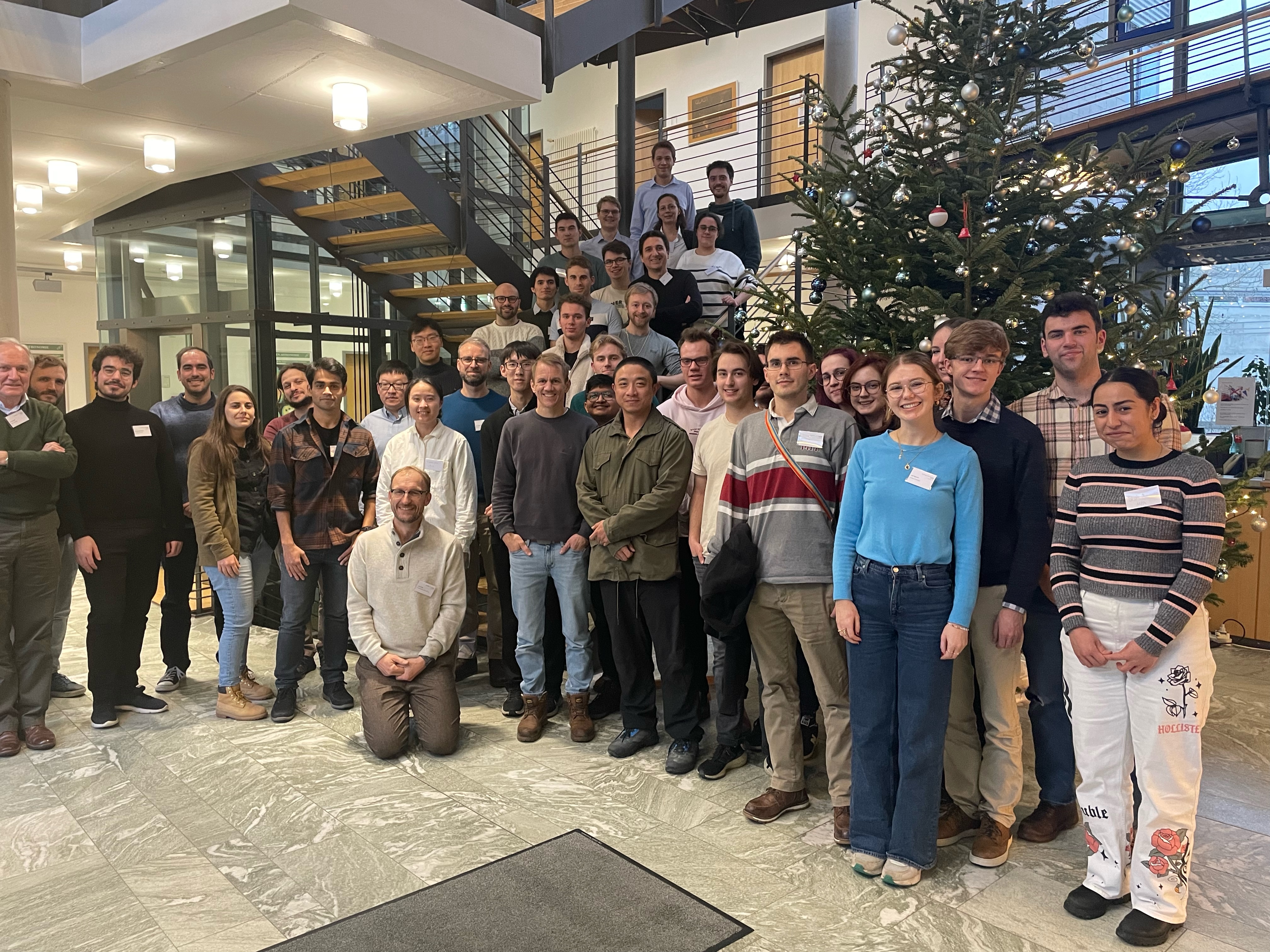
-
-
Introduction/reception Ryle room
Ryle room
Kavli Cambridge
Cambridge CB3 0EZ, Reino Unido -
CMB and clusters Ryle room
Ryle room
Kavli Cambridge
Cambridge CB3 0EZ, Reino Unido-
1
Emilie Hertig
Large-scale B-mode polarization of the cosmic microwave background (CMB) is a prime target for current and future experiments in search of primordial gravitational waves (PGW). With increasingly sensitive instruments being deployed, secondary B-modes induced by the weak gravitational lensing of CMB photons are becoming an important limitation and need to be mitigated. My talk will cover the construction and validation of a lensing B-mode template using data from the Atacama Cosmology Telescope (ACT), the unWISE galaxy survey, and Planck. Our template achieves the highest delensing efficiency demonstrated on real observations, removing 47% of the lensing B-mode power on large scales. I will then outline prospects for further improvements with data from the Simons Observatory (SO) and upcoming cosmological surveys, leading to forecasts for new constraints on the tensor-to-scalar ratio. Subject to data availability, I will finally discuss first steps towards the delensing of early SO polarization maps.
-
2
Piervittorio Conti
Galaxy cluster cosmology has proven to be a reliable probe not only for standard LCDM models, but also for testing gravity and modified physics. In this talk, I present my work on a Growth-Geometry split of the matter density parameter (Omega_m) within the context of LCDM, utilizing South Pole Telescope (SPT) and Dark Energy Survey (DES) data. By evaluating which of these two components is more tightly constrained by cluster data, we can determine whether galaxy clusters provide stronger constraints on the expansion history of the universe or on the growth and collapse of large-scale structures.
-
3
Niall MacCrann - "Probing the epoch of reionisation using the kSZ"
The epoch of reionisation is a key epoch in the history of our Universe, during which the first stars and galaxies formed, but it is extremely challenging to observe. Better characterisation of the EoR can reduce uncertainties on cosmological parameters like the neutrino mass. Here I describe how kSZ statistics, in particular the kSZ trispectrum and cross-correlation with CMB lensing, can be used for this purpose.
-
4
Petar Suman - "Searching for Cosmological Collider Signals in the CMB Data"
Recent developments in the cosmological collider programme have highlighted the possibility of probing new particle species present during inflation. In these scenarios, the inflaton couples to additional massive fields whose exchange leaves distinctive imprints in primordial correlation functions. In particular, the bispectrum exhibits characteristic momentum dependence controlled by the particle mass and angular dependence determined by its spin. These signatures open the possibility of using the primordial Universe as a particle collider capable of probing energies inaccessible to laboratory experiments.
In this talk, I will review recent developments in cosmological collider physics and describe how primordial bispectrum templates can be derived in a model-independent way using the boostless bootstrap. Next, I will summarize current observational efforts to detect cosmological collider signals, mostly in the cosmic microwave background (CMB). I will present current constraints on a range of cosmological collider scenarios and discuss the treatment of the look-elsewhere effect and future prospects for detecting cosmological collider signals. -
5
Licong Xu
We present a self-consistent joint analysis of the thermal Sunyaev-Zel’dovich (tSZ) power spectrum and cluster number counts (CNC) in which clusters detected above a signal-to-noise (SNR) threshold are masked from the power spectrum and used instead as the CNC sample, so that the two probes act on non-overlapping halo populations. Using synthetic Planck-like data from a halo-painting pipeline, we show that masking renders the binned bandpower distribution is statistically Gaussian in every multipole bin, whereas the full-sky distribution is highly skewed at large scales. We show that this joint analysis can significantly improve the cosmological constraints but is limited by the modelling of the foreground residuals. We apply this method to FLAMINGO hydrodynamical simulations to investigate how does the shape of the tSZ power spectrum changes if the giant clusters are masked progressively, thereby isolating the contributions of different halo populations to the tSZ signal.
-
1
-
Coffee break Ryle room
Ryle room
Kavli Cambridge
Cambridge CB3 0EZ, Reino Unido -
LSS Ryle room
Ryle room
Kavli Cambridge
Cambridge CB3 0EZ, Reino Unido-
6
Alex Laguë
Ultralight axions are a well-motivated dark matter candidate whose large de Broglie wavelength suppresses the growth of structure on small scales, making cosmological observations a powerful probe of their existence. Realizing the full constraining power of current and upcoming surveys, however, requires accurate predictions of nonlinear structure formation in mixed cold dark matter–ultralight axion cosmologies. I will present recent advances in modelling the nonlinear matter distribution using a simulation-calibrated halo model and discuss how these developments enable precision tests of ultralight axion dark matter across multiple cosmological observables. I will highlight applications to weak gravitational lensing and cosmic voids, demonstrating how complementary probes improve sensitivity to the axion mass and abundance while providing robust forecasts for next-generation surveys. Finally, I will share new constraints from gravitational lensing measurements by Planck, the Atacama Cosmology Telescope, and SPT-3G, which provide the strongest limits to date on ultralight axions in the mass range (10^{-26})–(10^{-24.5},\mathrm{eV}). These results significantly narrow the viable parameter space for ultralight axion dark matter and illustrate the growing power of nonlinear cosmological probes to test fundamental physics beyond LambdaCDM.
-
7
Sha Azyzy - "Tracing Primordial Parity Violation in Large-Scale Structure"
Parity violation provides a new probe of fundamental physics in the primordial Universe. Recent hints of parity-odd signals in large-scale structure motivate a careful connection between primordial parity-violating non-Gaussianity and late-time observables. We derive the parity-odd matter trispectrum at one-loop order, including the effects of nonlinear gravitational evolution. We then extend the calculation to biased tracers and obtain the halo trispectrum in the presence of primordial parity-violating non-Gaussianity. Our results provide a theoretical framework for searching for primordial parity violation in galaxy and halo four-point statistics.
-
8
Saswata Dasgupta
Detecting the global 21-cm signal from Cosmic Dawn and the Epoch of Reionization requires extremely precise calibration, since instrumental systematics can easily mimic or obscure the cosmological signal. In this work, we investigate the numerical stability of the Bayesian calibration pipeline used by the REACH experiment, which models receiver noise using the noise wave formalism. We identify a strong degeneracy between two noise wave components that leads to ill-conditioned and non-reproducible calibration solutions. Using singular value decomposition, we trace the origin of this instability and introduce a physically motivated mitigation strategy: fixing or independently estimating the noise source temperature before refitting the remaining noise wave parameters. Tests on mock data show that this approach produces stable, reproducible calibration solutions while preserving calibration quality. Although developed for REACH, the degeneracy arises from the structure of the noise wave model itself, making the method relevant for future global 21-cm experiments seeking robust constraints on early-Universe cosmology.
-
9
Hsiang-Ming Huang
We apply for the first time an alternative approach based on the Renormalization Group (RG) formalism, proposed in Rubira and Schmidt 2023, in which the bias parameters become explicitly dependent on the cut-off scale and are naturally suited for EFT-based field-level inference. Specifically, we use the Lagrangian perturbation theory forward-modeling code $\texttt{LEFTfield}$ to generate mock data at a fixed cut-off scale, and then estimate the running of the bias parameters at smaller cut-off scales using an EFT-based likelihood. In addition, we perform a conventional n-point correlation function analysis to measure the bias parameters in the large-scale limit for comparison with the RG predictions. This study serves as a proof of concept for the application of RG flow in galaxy bias, demonstrating the feasibility of measuring bias parameters with this novel approach.
-
6
-
Group photo Ryle room
Ryle room
Kavli Cambridge
Cambridge CB3 0EZ, Reino Unido -
Lunch Ryle room
Ryle room
Kavli Cambridge
Cambridge CB3 0EZ, Reino Unido -
Inference and computing Ryle room
Ryle room
Kavli Cambridge
Cambridge CB3 0EZ, Reino Unido-
10
Christopher Lovell
Cosmological simulations face a fundamental trade-off between volume and resolution: large boxes are representative of the real Universe, but have insufficient fidelity to model the detailed physics of galaxy formation, while high-resolution hydrodynamic simulations must be run in volumes far too small to be cosmologically representative. Zoom simulations can re-simulate small regions from a large parent box, capturing the rare regions not represented in small periodic boxes, but they cannot naively be used to measure clustering statistics at large distances. I will present a framework for combining many zoom regions together using neural density estimators to recover population statistics, conditioned on cosmology and astrophysics. Each region's measurement is conditioned on its known large-scale environment and cosmological parameters, and the global statistic follows by integrating the learned distribution over environments and over many parent boxes spanning different cosmologies. We demonstrate this with two emulators: the first predicts the halo mass function from individual zoom regions, and the second targets two-point clustering by measuring correlations between pairs of zoom regions and integrating these to recover the full galaxy 2PCF ξ(r). Both are validated on the Quijote BSQ suite, using sub-volumes as controlled proxy zooms. Finally, I will discuss a new zoom simulation suite in preparation designed to exploit this new technique.
-
11
Hui Kong - "Forward modeling observational systematics with Source Injection"
Source Injection produces synthetic source catalog by running the image reduction pipeline. The process replicates the complicated process from image to catalogs. The synthetic galaxies produced from source injection have similar observational systematics as real galaxies.
When a galaxy sample is selected, it occupies a continuous color space. Then galaxies within this sample may respond differently to various systematics. For example, fainter sources are more sensitive to galactic depth than brighter galaxies. If we model then as if all sources have the same systematics, the cosmological measurements may be biased. I call this effect “sub-sample systematics”.
I will first introduce my work in DESI and Euclid Source Injection. I will discuss how to mitigate sub-sample systematics with Source Injection, and discuss my on-going work of integrating it with field-level inference.
-
12
Anna Cremaschi
A question that has gained importance in recent years is how to maximize the cosmological information that can be extracted from observational data.
Approaches based on summary statistics compress the data into a lower-dimensional representation, thereby losing part of the information. In contrast, the core idea of field-level inference is to use the full overdensity field, bypassing the compression step entirely.
The LEFTfield code has been developed to enable this type of inference. Given some initial conditions, it computes the galaxy overdensity field at a desired redshift using Lagrangian Perturbation Theory (LPT) supplemented with Lagrangian or Eulerian implementation of galaxy bias. To ensure unbiased results, it is necessary to include in the forward modeling all relevant physical effects present in observed data; among these, the impact of massive neutrinos plays a central role.
Since neutrinos do not fit naturally into the analytical framework of LPT, alternative approaches are required to model their effects accurately. In this talk, I will present a first solution for implementing massive neutrinos in LEFTfield, opening the way to measuring neutrino masses from field-level data. -
13
Zekang Zhang
Weak gravitational lensing and photometric galaxy clustering are the two pillars of large-scale-structure cosmology, and both rest on one fragile assumption: that we know the redshift distribution, $n(z)$, of our galaxy samples. In this talk I show that this assumption breaks down in subtle but consequential ways, and present forward-modelling methods to fix it. Galaxies blended in the focal plane carry shear from multiple redshifts, distorting the effective distribution $n_\gamma(z)$ that lensing actually measures; I introduce an emulator of the pairwise shear response to neighbouring galaxies, built from dedicated HSC-like image simulations, that corrects this mixing and recovers a high-redshift tail otherwise biased low by ~0.05. On the clustering side, observational systematics make the lens $n(z)$ spatially anisotropic rather than the isotropic distribution standard analyses assume. Propagating this through a full forward model — realistic systematics maps, an ML-emulated selection function, and tomographic binning — into a 2×2pt analysis, I find the angular signal underestimated by up to ~10% at small scales, and for LSST-like depth $\sigma_8$ biased low by 1.7$\sigma$ and $\Omega_m$ high by 1.4$\sigma$, largely absorbed by a ~4$\sigma$ shift in high-redshift galaxy bias. These redshift-distribution systematics are a minor nuisance today but a serious threat for Stage-IV surveys, and tractable forward-modelling pipelines can mitigate them.
-
10
-
Coffee break Ryle room
Ryle room
Kavli Cambridge
Cambridge CB3 0EZ, Reino Unido -
Reionization and 21cm Ryle room
Ryle room
Kavli Cambridge
Cambridge CB3 0EZ, Reino Unido-
14
Joseph Mohr
We are leading the production of MeerKLASS on-the-fly interferometric imaging data and catalogs for the 10,000 deg2 MeerKLASS UHF survey. My group has focused on the production of continuum imaging and catalogs in UHF (and also L-band over a smaller test field). We are pursuing scientific analyses of multi-wavelength source catalogs, where each radio source is associated with an optical/NIR host with redshift and other physical characteristics. I would like to present the survey status together with the constraints on the radio galaxy population and its evolution as well as the radiative AGN (quasar) population to redshifts of z~6 to 7. We will present the redshift evolution of the radio galaxy population out to z~1 and also the latest population of high redshift radio-selected quasars identified in the MeerKLASS survey. These radio quasars represent the end-state of the quasar evolutionary sequence and corresponding to galaxies hosting massive BHs (>10^7.5 Msolar). Identifying these objects at redshifts z~6-7 enables new insights into the rapid growth and production of SMBHs during the epoch of reionization.
-
15
Sarah Libanore - "A Tale of Many Lines: Mapping the Cosmos through Line Intensity Mapping"
Line intensity mapping (LIM) is emerging as a powerful observational technique to study the large-scale structure across an unprecedented range of cosmic history. By measuring the integrated emission from entire galaxy populations rather than resolving individual sources, LIM complements traditional galaxy surveys and provides a unique view of the Cosmic Web from the nearby Universe to Cosmic Dawn.
In this talk, I will highlight the unique role of LIM during the Epoch of Reionization, where it simultaneously probes the underlying cosmological density field and the astrophysics of the first sources. I will discuss the scientific opportunities offered by multi-line observations and highlight how cross-correlations with different tracers can reveal the emergence and evolution of the earliest galaxies, as well as provide new tests of cosmology beyond the standard model. With a new generation of ground- and space-based instruments beginning to deliver data, LIM is set to become a key probe of the Cosmic Web across cosmic time. -
16
Oliver Basquette - "The cosmological role of Population II and III X-ray binaries"
X-ray binaries (XRBs) are cosmologically significant sources of heating and pre-ionisation in the early Universe, dominating the high-redshift X-ray background throughout Cosmic Dawn and the Epoch of Reionisation (EoR). Population III XRBs are a largely homogeneous population that dominate heating in minihaloes, while Population II X-ray binaries are a highly heterogeneous population, with a composition and initial mass function that chemically evolve throughout the EoR. Soft X-rays from XRBs are major contributors to
the heating of the intergalactic medium, and are therefore expected to be important drivers of the evolution of the 21-cm signal. In this talk I will present a new model of the X-ray background throughout cosmic time, derived from population-synthesis simulations of XRBs. I will discuss how observations of local XRBs can help constrain the average properties of high-redshift XRBs and their chemical evolution.
-
14
-
Pub: The Maypole Ryle room
Ryle room
Kavli Cambridge
Cambridge CB3 0EZ, Reino Unidohttps://maps.app.goo.gl/HAMChc13FQPV65iS9
-
-
-
LSS Ryle room
Ryle room
Kavli Cambridge
Cambridge CB3 0EZ, Reino Unido-
17
Sijin Chen
TBC
-
18
Adrian K.W. Chung - "Stochastic Siren: Astrophysical Gravitational-Wave Background Measurements of the Hubble Constant"
We report the first measurement of the Hubble constant 𝐻_0 using the stochastic gravitational-wave background arising from binary black hole mergers. This astrophysical background is sensitive to the expansion history of the Universe and, thus, can be used for cosmological parameter inference independently of not only electromagnetic methods, but also gravitational-wave standard siren approaches. We describe the background’s cosmological dependence and show how it can be used as a “stochastic siren” to measure 𝐻0. By analyzing existing resolved binary black hole mergers and the current nondetection of the background, we find that 𝐻_0 can be measured more accurately relative to using resolved mergers alone. We also note that the stochastic siren may serve a unique role in the Hubble tension in that the lower bound of the 𝐻_0 measurement would progressively increase with continued nondetection of the background.
-
19
Safak Celik
Large-scale structure is a powerful probe of dark matter beyond the standard cold paradigm, since even a subdominant warm component can leave observable signatures through its free-streaming effects. In mixed dark matter cosmologies, where cold and warm components evolve jointly, these effects generate not only total density fluctuations but also relative density and velocity perturbations that can leave distinct imprints on galaxy clustering. I present a perturbative framework to describe these signatures using a two-fluid treatment of cold and warm dark matter. In recent work (arXiv:2508.21481), we derived the linear solutions for the coupled system and showed that the relative modes induce new contributions to the galaxy bias expansion. Including these effects, I computed the linear galaxy power spectrum in both real and redshift space and performed Fisher forecasts for DESI and PFS, showing that neglecting relative perturbations can significantly bias constraints on the warm dark matter fraction, particularly for light warm relics. I will then present ongoing work, now nearing completion, that extends this framework beyond linear order by incorporating the nonlinear evolution of mixed dark matter perturbations together with the associated relative-mode bias contributions. This yields a more accurate and systematically improvable description of galaxy clustering across a wider range of scales and strengthens the interpretation of upcoming survey data in searches for non-standard dark matter.
-
20
Júlia Laguna I Miralles - "AGN Variability Cosmology in the Survey Era"
Testing the expansion history beyond the redshift range densely sampled by Type Ia supernovae requires independent distance probes with distinct astrophysical systematics. Wide-field time-domain surveys now deliver light curves for hundreds of thousands of quasars, making AGN variability a viable survey-scale distance indicator via the optical/UV variability–luminosity anti-correlation: at fixed rest-frame wavelength and timescale, more luminous Type 1 AGN vary less.
I will present a hierarchical Bayesian framework for AGN-variability cosmology that combines Gaussian-process light-curve modelling with population-level inference of the variability–luminosity relation and cosmological distance–redshift parameters. The framework propagates light-curve uncertainties into the population-level fit, with Gaia-DR3-like mock catalogues used to validate the method for survey-scale inference under realistic selection effects.
Building on this validation, I will present first calibration results from a parent sample of over 200,000 SDSS quasars out to (z\simeq3.5), combining Gaia G and ZTF g/r light curves with multi-epoch DESI DR1 spectroscopy where available. I will show how this data set constrains the wavelength and luminosity dependence of the variability relation, and discuss what these calibrations imply for the distance precision and cosmological reach of AGN variability for tests of ΛCDM and its extensions. -
21
Yunhe Wang - "Testing HEFT counterterm modeling of baryon feedback with Magneticum simulations"
Baryon feedback in galaxy-galaxy lensing (GGL) and the combination with galaxy clustering and cosmic shear (3x2pt), and its measurement in hydrodynamical simulations, are much less studied than in cosmic shear alone. Modeling baryonic feedback with counterterms in the hybrid effective field theory (HEFT) has not been tested against realistic baryonic effects from simulations.
This project aims to study the sufficiency of the HEFT counterterm model in capturing baryonic physics, using measurements of its impact on the galaxy, galaxy-matter, and matter power spectra from hydrodynamical simulations for DESI-like galaxy samples. We will select DESI BGS- and LRG-like galaxies in the Magneticum Pathfinder simulation by applying stellar mass, SFR, and magnitude cuts to match the target number densities. The selected galaxies will be bijectively matched to subhalos in the dark-matter-only (DMO) runs. For galaxies without a bijective match, typically those affected by tidal stripping, we will reconstruct their DMO positions using their distances from the host halo center.
With the measured hydro-to-DMO ratios in the clustering, matter, and cross power spectra, we will perform simulated likelihood analysis to test up to what scale the counterterm model can account for the baryonic effects, and whether higher-order counterterms are required for galaxy-galaxy lensing. We will further investigate the relationship between counterterms in clustering, GGL, and cosmic shear, and the implications for their prior choices, which are currently treated as separate nuisance parameters with conservative priors.
-
17
-
Coffee break Ryle room
Ryle room
Kavli Cambridge
Cambridge CB3 0EZ, Reino Unido -
Inference and computing Ryle room
Ryle room
Kavli Cambridge
Cambridge CB3 0EZ, Reino Unido-
22
Stephen Thorp - "pop-cosmos: forward modelling and inference for cosmological galaxy catalogues"
Wide-area surveys that measure the clustering and weak lensing of galaxies are some of our most powerful cosmological probes, with Stage IV projects like the Vera C. Rubin Observatory, Euclid, and Dark Energy Spectroscopic Intrument (DESI) set to enable high-precision cosmological measurements in the coming years. Getting the most out of these surveys will rely on careful modelling of the galaxies they observe, both as individuals and as a population. I will present pop-cosmos – a stellar population synthesis- (SPS-)based generative model trained on 26-band UV-MIR photometry from the COSMOS2020 catalogue – our framework for tackling this challenge. I will show how we can use pop-cosmos to generate realistic mock catalogues for photometric weak lensing surveys – using the Kilo Degree Survey (KiDS) as an example – enabling us to forward model tomographic redshift distributions without needing a spectroscopic reference sample. I will also demonstrate how our generative model can be used as a prior when performing SPS parameter inference for individual galaxies, providing accurate redshift estimation from broadband photometry, and enabling the selection of tailored subsamples of galaxies based on their physical properties (stellar mass, star-formation rate, etc.). I will show for KiDS-1000 how we can use our SPS parameter posteriors to exclude massive quenched galaxies – thought to be more susceptible to intrinsic alignments – from a weak lensing source catalogue more cleanly than is possible with a simple colour cut, and for DESI how we can define star-forming and quiescent subsamples of galaxies for multi-tracer studies. I will finally highlight our latest results from performing Bayesian SPS parameter inference at Stage III survey-scale for ~41 million galaxies from KiDS-Legacy.
-
23
Alicia Finger
This talk will briefly cover the basics of SBI before delving into methods for validating a neural network and its performance demonstrated on neural posterior estimation for cosmological parameters based on analytical simulations of galaxy cluster catalogs. Finally the talk will explain how network performance for this use-case scales with the inferred parameters and number of training simulations provided.
-
24
Ivana Nikolac
Standard analyses of galaxy clustering rely on summary statistics such as the power spectrum and bispectrum, but extending to higher-order n-point functions quickly becomes intractable. Field-level inference (FLI) offers an alternative by forward-modeling the galaxy density field and explicitly employing the full joint posterior of the initial conditions, cosmological parameters, and bias parameters given the data. We consider a simplified scenario in which analytical predictions at the field level are possible, enabling a direct and controlled comparison with n-point statistics. Within the framework of the Effective Field Theory of Large-Scale Structure (EFTofLSS), we describe galaxy clustering with a finite set of effective parameters and construct summary statistics from auto- and cross-correlations of powers of the observed density field, providing an efficient means of incorporating higher-order information. This approach allows us to assess the relative information content and robustness of field-level and n-point analyses. The same framework can be extended to more complex forward model, such as those including primordial non-Gaussianity or additional bias operators, paving the way for testing new physics.
-
22
-
Lunch Ryle room
Ryle room
Kavli Cambridge
Cambridge CB3 0EZ, Reino Unido -
Early Universe Centre for Mathematical Sciences
Centre for Mathematical Sciences
-
25
Alex Jenkins - "Toward a real-time theory of vacuum decay"
False vacuum decay plays a pivotal role in the physics of the early Universe. However, we lack a satisfying theoretical understanding of this process, with existing approaches working only in imaginary (Euclidean) time, and relying on untested assumptions and approximations. In this talk, I will introduce two complementary approaches toward a real-time theory of vacuum decay: semiclassical numerical simulations on the lattice, and quantum analogue experiments in the laboratory. I will describe some of the new physical insights emerging from these approaches, and their implications for inflation, baryogenesis, and gravitational-wave cosmology.
-
26
Matthias Nowinski - "Inflationary Bispectra and IR Physics from Quantum Simulators"
Bose-Einstein condensates have been used successfully as quantum simulators for early-universe particle production. We extend this analogy to the interacting theory. To this end, we compute the leading interaction terms expected in a general experimental setup that determine the 3-point correlations. We apply them to cosmologically motivated expanding model universes, but also periodically oscillating ones. While expanding scale factors do not necessarily lead to easily observable signatures due to experimental
constraints on the realizable scale factor, periodically driven ones produce resonant correlators that grow linearly over time and lend themselves well to experimental detection. One direct application of this analysis is the experimental study of late-time infrared divergencies often discussed in the context of massless scalars in de Sitter space. -
27
Guanming Liang
Inflation offers a compelling explanation of how the primordial universe evolved into the universe well described by $\Lambda$CDM. Measuring the non-Gaussianity of primordial density fluctuations will deliver crucial insight into the more fundamental mechanism behind inflation. We forecast future constraints on local primordial non-Gaussianity ($f_{\rm NL}^{\rm loc}$) under the context of LSST/SPHEREx$\times$SO. This leverages the $f_{\rm NL}$-induced scale dependent bias on galaxy overdensity $\delta_g$, cross-correlated with the CMB kinetic Sunyaev-Zeldovich (kSZ) reconstructed velocity $v$ for cosmic variance cancellation. The large-scale $gg$ autospectrum suffers from observational systematics, but we emphasize that removing large-scale $gg$-auto and relying solely on $gv$ cross correlations yields a promising $\sigma(f_{\rm NL})\sim 1$, where $\sigma(f_{\rm NL})$ is the error bar in measuring $f_{\rm NL}^{\rm loc}$. We also briefly discuss how this constraint depends on the uncertain kSZ velocity signal amplitude. Finally, we compare cross-correlations between $\delta_g\times\kappa$ (CMB lensing) and $\delta_g\times v$ for constraining $f_{\rm NL}^{\rm loc}$.
-
28
Lasse Gerblich - "Gravitational and Axion Radiation from thin Cosmic Strings"
Cosmic strings are one-dimensional topological defects that may form in symmetry-breaking phase transitions in the early universe. While they may reach cosmological scales in length they are typically thinner than a proton. Therefore we can treat them as essentially one-dimensional when modelling their dynamics.
If they exist we may detect them through the radiation they emit: If they form in the breaking of a gauge symmetry they produce gravitational waves, and if they form in the breaking of a global symmetry they emit light scalar axion-like particles. -
29
Bowei Zhang
Dissipative effects appear in many early-Universe scenarios, yet their universal observational signatures and systematic confrontation with data remain largely unexplored. We employ the Open Effective Field Theory of Inflation (Open EFToI) to consistently incorporate dissipative and stochastic effects while preserving scale invariance. Dissipation enhances specific interaction channels of the Goldstone mode, generating distinctive primordial non-Gaussian signatures, beyond those generically produced by standard EFToI. In the weak-dissipation regime, this includes folded bispectrum shapes observationally more favoured than both the equilateral and orthogonal templates. Using the Modal bispectrum pipeline with the Planck CMB data, we obtain the likelihood and derive the first model-independent bounds on early-Universe dissipation.
-
25
-
Coffee break 1st Floor Common Room, Pavilion B, Centre for Mathematical Sciences
1st Floor Common Room, Pavilion B, Centre for Mathematical Sciences
-
Conference Dinner Ryle room
Ryle room
Kavli Cambridge
Cambridge CB3 0EZ, Reino Unido
-
-
-
CMB and clusters Ryle room
Ryle room
Kavli Cambridge
Cambridge CB3 0EZ, Reino Unido-
30
Matthias Klein - "Turning SZ Candidates into Galaxy Cluster Samples: Pushing Multi-Wavelength Confirmation to Its Limits"
Galaxy clusters are sensitive probes of the growth of cosmic structure, but their cosmological power depends on clean samples with well-characterized selection, accurate redshifts, and controlled contamination. I will discuss recent progress and challenges in turning large samples of more than 10,000 ICM-selected candidates into well-controlled galaxy cluster catalogs using multi-wavelength optical and infrared data. The talk will focus on methods to quantify and validate sample quality, selection effects, and systematics, while also highlighting limitations set by the depth, wavelength coverage, and resolution of currently available datasets.
As a key example, I will present recent results from the SPT-3G Main Survey, covering about 1,600 deg² and reaching cluster masses of M₅₀₀c ≈ 10¹⁴ M⊙ at z>1. This high sensitivity at high redshift pushes existing large-area optical and infrared surveys to their limits. Ongoing and recently started surveys such as Euclid and the Rubin Observatory’s LSST will therefore be essential for fully exploiting the next generation of SZ-selected cluster samples. I will conclude with first insights into cluster confirmation with Euclid. -
31
Ola Kusiak
TBC (Simons Observatory Initial Science Observations or projected-fields kSZ)
-
32
Lena Scheuchl
-
33
Luca Abu El-Haj
Particle production is common to many microphysical models of inflation and can imprint observable features in the cosmic microwave background (CMB) anisotropies. Based on arxiv: 2606.26823, 2509.23123, we consider a scenario in which the inflaton couples to an extremely massive field ($m_\chi \gtrsim \mathcal{O}(100 H_I)$, where $H_I$ is the inflationary Hubble scale). In this model, particle production happens in a burst at a characteristic conformal time, $\eta_*$, which sources localised features in the CMB. We explore these localised features both through a position space search, adapting techniques from thermal Sunyaev-Zeldovich (tSZ) cluster finding, to search Planck data, and through a more conventional power spectrum analysis, computing the full contribution to the power spectrum, and searching for these features in Planck and Atacama Cosmology Telescope (ACT) data. From here we put bounds on the underlying inflationary model, and compare the constraining power of the two methods.
-
34
Jack Kwok
Galaxy clusters carry angular momentum. If the intracluster gas rotates coherently, the kinetic Sunyaev-Zeldovich (kSZ) effect imprints a dipole on the microwave sky centered on the cluster. We show that microwave maps alone can be used to reconstruct a noisy vector field tracing the projected angular momentum of the ionized gas. In this talk we introduce a simple model for coherent intracluster gas rotation. Using this model, we present an optimal multifrequency matched filter to extract the rotational kSZ signal and forecast single-cluster signal-to-noise (SNR) as a function of mass and redshift for Simons Observatory. This work provides a practical framework for CMB measurements of intracluster gas rotation, as a step towards observational study of cosmic angular momentum.
-
30
-
Coffee break Ryle room
Ryle room
Kavli Cambridge
Cambridge CB3 0EZ, Reino Unido -
Reionization and 21cm Ryle room
Ryle room
Kavli Cambridge
Cambridge CB3 0EZ, Reino Unido-
35
Timo Kist - "Learning CMB-independent reionisation constraints from high-redshift quasars"
Understanding the Epoch of Reionisation remains one of the pivotal tasks of modern cosmology, embodied by one of the six base parameters of the Lambda-CDM model: the reionisation optical depth, whose Planck legacy constraint has recently been challenged in order to resolve tensions of the DESI BAO measurements with the base Lambda-CDM model. Meanwhile, next-generation telescopes such as EUCLID and JWST are opening up the path to the first precision constraints on reionisation history derived from the Lyman-alpha damping wing signature imprinted by the foreground neutral intergalactic medium (IGM) on the spectra of high-redshift quasars.
We developed a new simulation-based inference framework – coded fully differentiably in the machine learning framework JAX – to disentangle the IGM damping wing from a quasar's unknown intrinsic spectrum and infer its lifetime as well as two physical measures of the local ionisation topology in front of the source: the HI column density and its distance to the first neutral patch. Our pipeline accounts for all relevant modelling uncertainties, caused by IGM transmission fluctuations, quasar continuum reconstruction, and spectral noise. Enabled by a normalising flow model as neural likelihood estimator, our framework is the first that harnesses the full-resolution spectral information, including the highly non-Gaussian pixels blueward of the Lyman-alpha line. By analysing higher-order statistics of synthetic flow-generated spectra, we demonstrate that our flow model has truly learned non-Gaussian information, significantly tightening the resulting parameter constraints.
Based on realistic mock spectra resembling the distribution of upcoming quasars found by Euclid, we show that we will soon be able to robustly constrain the evolution of the IGM neutral fraction at the < 5% level between 6 < z < 10. We present the first such constraints covering the redshift range 5.75 < z < 7.7 based on 41 archival spectra and 27 new high-quality JWST/NIRSpec spectra from our currently running 94-hour Cycle 4 program, constraining both the global timing and the local ionisation topology near these objects and placing a robust Planck-independent constraint on the reionisation optical depth.
-
36
Goraksh Sandeep Kolge
The epoch of reionisation (EoR) is one of the major phase transitions in the universe’s history as the first UV sources – expected to be hosted by dark matter halos which are end points of structure formation – ionise the neutral hydrogen left after recombination. Theoretically, we expect bubbles of ionised hydrogen centred at UV emitting galaxies to grow and intersect, eventually reionising the inter-galactic medium. Recent measurements from the JWST-ASPIRE program have provided the first observational signatures of these ionised regions around [O III] emitting galaxies.
In this work, we forward model observational complexities involved in the measurement of excess transmission of Lyman-a flux around [O III] emitters with the BIBORTON semi-numerical simulations. Using these cosmological simulations that also capture Lyman-a opacity fluctuations at late times, we reproduce the observed [O III] emitters - IGM cross-correlation. We statistically compare our simulations with the observed excess transmission close to galaxies, from which we present our constraints on the mean free path of ionising photons and the mean photoionisation rate. We present promising forecasts for extending this observational test with larger samples of quasar sightlines. Additionally, while other Ly-a measurements have indicated reionisation ending at z ~ 5.3, we find a mild preference in the data for reionisation ending at z > 5.3 which can be tested with additional data.
-
37
Olga Garcia Gallego
The Lyman-alpha forest is a powerful cosmological probe of matter density fluctuations in the weakly non-linear regime through the high redshift and underdense intergalactic medium (IGM). On small scales, the Lyman-alpha 1D flux power spectrum is uniquely sensitive to both the properties of dark matter and the complex gas dynamics driven by IGM photoheating during reionization, offering cosmological constraints that are complementary to other probes, such as the CMB. In this talk, I present recent constraints on two dark matter candidates separated by more than 20 orders of magnitude in mass: Cold+Warm Dark Matter (CWDM) and axion-like particles (ALPs), derived by comparing the Sherwood-Relics hydrodynamical simulation suite with high signal-to-noise ratio, high-redshift UVES and HIRES spectra. These results highlight how small-scale features in the forest reveal fundamental aspects of both dark matter and the IGM thermal history.
-
35
-
Lunch Ryle room
Ryle room
Kavli Cambridge
Cambridge CB3 0EZ, Reino Unido -
LSS Ryle room
Ryle room
Kavli Cambridge
Cambridge CB3 0EZ, Reino Unido-
38
Henrique Rubira
TBC (LSS related)
-
39
Pritha Paul
Upcoming and ongoing large-scale structure surveys are probing the Universe across increasingly large volumes, opening a new window onto relativistic effects that become important on horizon scales. In this talk, I will discuss how these effects enter observed galaxy clustering statistics in redshift space. While the standard Kaiser contribution captures the dominant Newtonian redshift-space distortion, additional Doppler and relativistic projection terms introduce characteristic odd-parity signatures. These contributions are particularly important in higher-order statistics, where they can provide new information about primordial non-Gaussianity, improve constraints on cosmological parameters, and could potentially offer tests of fundamental physics such as parity. I will present the structure of the relativistic corrections at second and third order and their impact on the bispectrum and trispectrum.
-
40
Andrea Pari
The cosmological bispectrum is a powerful probe of non-Gaussianity, sensitive to both nonlinear structure formation and primordial physics from inflation. However, measuring the bispectrum in large-scale structure surveys is computationally challenging due to its high dimensionality and observational effects.
In this talk I present ongoing work extending the MODAL bispectrum estimator to projected maps of large-scale structure across multiple redshift bins. This approach aims to retain sensitivity to the underlying three-dimensional clustering while suppressing small-scale redshift-space distortions. It also naturally enables cross-correlations with projected observables such as CMB lensing, providing a potential route toward joint CMB–LSS analyses of non-Gaussianity. -
41
Aditya Singh
Extracting precise cosmological constraints from cosmic shear observations requires accurate modeling of the non-linear matter power spectrum, which is suppressed at small scales ($k\sim$1 to 10$\,h~$Mpc$^{-1}$) due to baryonic feedback. Various hydrodynamical simulations predict different levels of matter power spectrum suppression based on the type and strength of the feedback mechanisms employed. The intracluster medium (ICM) mass in galaxy clusters is strongly correlated with the cluster halo mass, and this relation -- especially the mass dependence of the relation -- is sensitive to baryonic feedback processes. While the measurement of ICM masses M_ICM within a specified radius has long been routine using X-ray observations, the extraction of robust cluster halo masses and their uncertainties using survey weak lensing datasets is relatively new. We constrain the M_ICM-M_500c-z relation using 122 South Pole Telescope thermal Sunyaev-Zel'dovich effect (tSZE) selected galaxy clusters with M_ICM measurements based on deep observations with the Chandra X-ray Observatory and \textit{XMM-Newton}, along with newly calibrated halo masses M_500c derived using weak gravitational lensing data from the Dark Energy Survey. By comparing the observed cluster relation with the relation extracted from a variety of hydrodynamical simulations that incorporate a range of feedback models, we extract a marginal likelihood for each simulation. We use these marginal likelihoods, together with the matter power spectrum from each simulation, to infer the baryon-suppressed matter power spectrum and its 68\% credible interval. This methodology allows us to rule out some extreme feedback scenarios that include too much or too little feedback. Furthermore, we investigate the cosmological dependence of this suppression, finding it to be primarily sensitive to the cosmic baryon fraction, while the residual dependence on $\Omega_{\mathrm{m}}$ and $\sigma_8$ at fixed baryon fraction remains sub-dominant and at the percent level. These findings suggest that baryonic suppression alone may not be sufficient to reconcile the differences between cosmological parameters from $z\lesssim1$ cosmic shear and Planck primary CMB analyses. This approach underscores the usefulness of well-defined tSZE-selected galaxy cluster samples with associated deep X-ray observations and survey weak lensing data for constraining baryonic feedback, and thereby better defining the matter power spectrum at small scales. These results and future analyses with larger samples and improved weak lensing datasets will be essential for obtaining unbiased cosmological constraints and improving our understanding of dark matter with future cosmic shear experiments like those planned with the Euclid mission and the Rubin Observatory.
-
42
Yong Sheng Yap - "Tide-and-Seek: Scale-dependent bias from angular-dependent squeezing of the primordial bispectrum "
Scale-dependent bias, a result of nonlinear modulation of small-scale statistics by long-wavelength modes, is a tell-tale sign of inflationary physics. Through the squeezed-limit bispectrum, the nonlinear coupling depends on both the magnitude ratio and the relative angle between the long and short modes, the latter largely disregarded as inaccessible through two-point correlations of the density field. Although this is true for complete tracer samples, it is not true when selection effects are prominent. In this talk, I will demonstrate through separate-universe simulations, a scale-dependent bias from this angle-dependent modulation can be recovered in the halo clustering power spectrum by curating subsamples selected via non-scalar properties. The same effect can also be seen in the 3D flux power spectra of the Lyman-alpha forest. This signal is orthogonal to the isotropic local shape when considering tracer-matter cross-correlations, and opens up a new window into primordial non-Gaussianity searches.
-
38
-
Coffee break Ryle room
Ryle room
Kavli Cambridge
Cambridge CB3 0EZ, Reino Unido -
Inference and computing Ryle room
Ryle room
Kavli Cambridge
Cambridge CB3 0EZ, Reino Unido-
43
Lawrence Berry - "GPU-accelerating CMB cosmology with state of the art ODE solvers"
GPUs offer a way to massively parallelise certain types of physical models, allowing us to compare more models for the same compute budget (and hence do more science) whilst avoiding the use of emulators (which must be retrained every time you modify the underlying physics). More efficient forward models also allow us to tackle higher-dimensional problems (map/field-level inference) and more complex foreground systematics and nuisance parameters.
In particular, the so-called Einstein-Boltzmann equations that underlie models of the CMB are linear ordinary differential equations that are highly amenable to parallelisation on a GPU, across both wave modes and parameters. Meanwhile, modern cosmological analyses are burdened with the technical debt of low-level codes written in FORTRAN and C, which are difficult to modify when trying to test new models of physics.
We have therefore written a new CMB code in Python and JAX (DISCO-EB) which can take advantage of the massive computational throughput of modern GPUs, but is easy to modify with new physics. As part of this work, we have developed new ODE solvers that are better optimised for solving many small ODEs at once and are 100x faster than the current Python/JAX state-of-the-art (diffrax). The result is precision similar to that of existing codes but at vastly reduced $ inference cost. The ODE solvers themselves are packaged separately and could have broad application in the scientific community.
This deep dive into the world of GPU programming has taught us that simply "Jaxifying" one's code is not always the best solution, and that it pays to understand how a GPU works under the hood. Moreover, as GPU manufacturers begin to optimise their chips for a deep learning community that prefers lower precision matrix multiplication operations, the scientific community must adapt its codes to make use of GPUs that have fewer 64 bit precision cores but more "tensor cores". We present a number of examples of future-proofing to this effect.
-
44
Kai Lehman: Evidence Networks with Learned References for Fast Simulation-Based Model Inference
-
45
Nikolas Frediani - "Data-driven Galaxy Population Prior for Photometric Redshifts"
One of the major frontiers for Stage IV galaxy surveys is photometric redshift estimation. For weak lensing cosmology, the required characterization of redshift distributions is an order of magnitude more precise than current state-of-the-art. Because the true population is not directly accessible to us, every photo-z method relies - implicitly or explicitly - on a prior over galaxy SEDs, whether through physical modeling of the galaxy population or as imprinted in the training data of machine learning algorithms.
While advances are being made both in population modeling (on the physically motivated side, as in recent e.g. SPS-based forward models, as well as in advanced ML algorithms) and the gathering of large, representative spectroscopic calibration sets (e.g. with DESI and 4MOST), current methods still fail to reach Stage IV precision even under ideal conditions. Closing this gap will need a prior that is as flexible and agnostic to the population as possible, as any restrictive parameterised assumption ultimately limits the achievable accuracy. Generative models can fulfill this role as an expressive realization of such a prior in the context of a full forward-model of the galaxy population.
To address this challenge, we propose an entirely data-driven approach for forward-modeling the galaxy population. We train a generative model to learn the joint distribution of compact representations of rest frame galaxy spectra and redshifts. As a proof-of-concept, we train and validate on simulations, which enables direct comparison to the ground truth, and show that we reproduce the color-redshift relation to the required accuracy. Specifically, the learned population can reach a mean redshift bias below the per-mille level in realistically color-selected tomographic bins. This demonstrates that generative modelling is a promising path towards a Stage IV galaxy population prior.
-
43
-