When Worlds Collide: Inauguration of the Munich Center for Geoastronomy

→ Europe/Berlin
A 140 (LMU Main Building (Hauptgebäude))

A 140

LMU Main Building (Hauptgebäude)

Geschwister-Scholl-Platz 1, 80539 München
Kevin Heng (Munich Center for Geoastronomy, LMU), Yan Lavallée (Munich Center for Geoastronomy, LMU)
Description

Event details

From the formation of planets and planetary evolution, to the forces that shape worlds near and far, Geoastronomy explores the intersections where disciplines - and worlds - collide. Join us for the official inauguration of the Munich Center for Geoastronomy - a 2-day event dedicated to bridging the connections between Earth and the cosmos under the theme “When Worlds Collide”. 

Programme

The event features a series of public keynote talks by world-renowned international scientists/authors and scientific talks by local experts from across geosciences, planetary sciences, and astrophysics. Through accessible presentations and lively discussions, our speakers will share insights into some of the most profound questions and cutting edge developments in modern earth and space sciences. 

Keynote Talks: 

To See a World in a Point of Light: The Past, Present, and Future of Exoplanet Detection
Volcanic Outgassing Across Time and Space
Searching for Alien Earths
The First Minerals and Rocks of the Solar System
Bridging Stars to Planets: Geoastronomy with Brown Dwarfs

Short Scientific Talks: 

Photosynthesis as an Engineering Problem
Planetary surface constraints on Volcanic degassing
  • Dist. Prof. Donald Dingwell (LMU, Munich and Hangzhou International Innovation Institute)

The HECATE space mission: a German Helium Geocorona and Atmosphere Exploration Satellite
  • Dr. Frank Grupp (LMU and MPI-Extraterrestrial Physics, Munich)

Probing the subsurface of planetary objects
Landscapes of other worlds: Towards mapping exoplanet atmospheres

Audience

This event is open to everyone, and from all disciplines and faculties - whether you are a student, scientist, educator, administrator, someone passionate about science or simply curious about the cosmos and our place within it. This event offers a unique opportunity - not just to engage with and learn from ideas and discoveries, but also to network with the people shaping some of the most exciting frontiers in science today. 

We warmly welcome you to join us for this celebration of worlds - from Earth to Exoplanets! 

Registration (now closed)

Attendance to this event is free. However, registration is required.

Acknowledgement

We gratefully acknowledge the Origins Excellence Cluster as a co-organizer of this event and thank them for their financial support.

----------------------------------------------------------------------------------

Notice:
Photographs and/or video recordings will be taken during the event for public relations, communication and documentation purposes, and may be
published on our website, in printed matter and on our social media and professional networking channels (e.g. LinkedIn).

----------------------------------------------------------------------------------


Keynotes
Poster
Scientific Talks
MCGA Coordination Office
  • Monday 5 October
    • 09:00 → 10:00
      Welcome - Registrations with Coffee/Tea 1h
    • 10:00 → 10:30
      Welcome speech | Co-Directors of the Munich Center for Geoastronomy 30m A 140

      A 140

      LMU Main Building (Hauptgebäude)

      Geschwister-Scholl-Platz 1, 80539 München
      Speakers: Prof. Kevin Heng (LMU, Munich), Prof. Yan Lavallée (LMU, Munich)
    • 10:30 → 11:30
      Keynote Talk: To See a World in a Point of Light: The Past, Present, and Future of Exoplanet Detection 1h A 140

      A 140

      LMU Main Building (Hauptgebäude)

      Geschwister-Scholl-Platz 1, 80539 München

      A distant star appears as a single point of light - yet hidden within that light can be the signatures of an entire planetary system, if you know how to look. Astronomers have found thousands of planets by measuring tiny shifts, dips, and blips in the light from distant stars, using techniques that range from simple geometry and optics to Einstein’s general theory of relativity. This lecture will explain the main detection methods, describe some of the surprising planetary systems they have revealed, and look ahead to the next phase of discovery.

      enter image description here

      Speaker: Prof. Joshua Winn (Princeton University, USA)
    • 11:30 → 13:00
      Lunch Break 1h 30m
    • 13:00 → 14:00
      Keynote Talk: Volcanic Outgassing Across Time and Space 1h A 140

      A 140

      LMU Main Building (Hauptgebäude)

      Geschwister-Scholl-Platz 1, 80539 München

      Volcanic degassing is the principal mechanism for the transfer of volatiles from the interior of a planet to its surface. In this talk I will discuss the role that volcanoes play, over geological time and across our solar system, in the development of atmospheres, in regulating climate and in the delivery of elements to the planetary surface that are critical for life.

      enter image description here

      Speaker: Prof. Marie Edmonds (Cambridge University, U.K.)
    • 14:00 → 15:00
      Keynote Talk: Searching for Alien Earths 1h A 140

      A 140

      LMU Main Building (Hauptgebäude)

      Geschwister-Scholl-Platz 1, 80539 München

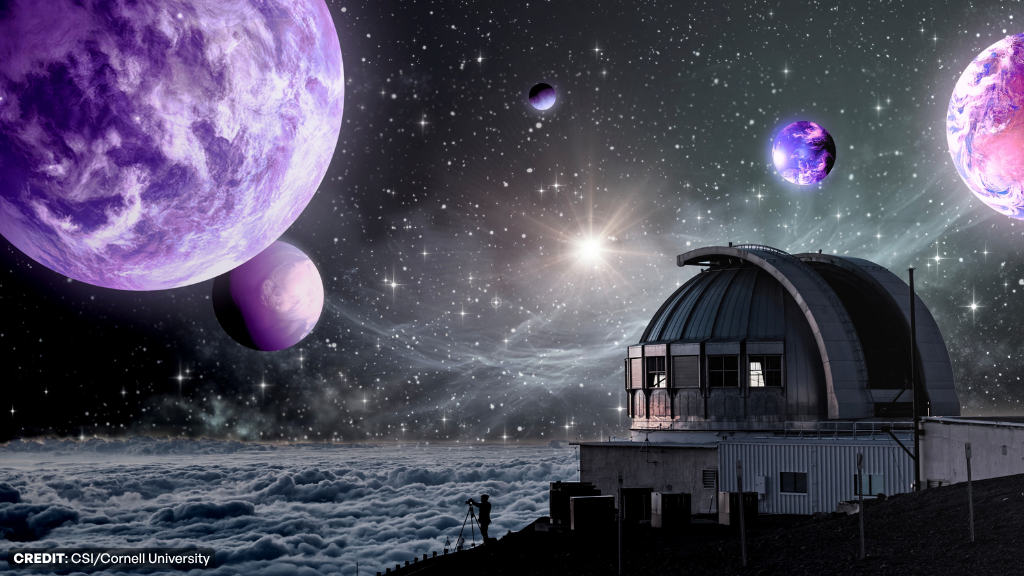
      For thousands of years, humans have wondered whether we're alone in the cosmos. Now, for the first time, we have the technology to investigate. But once you look for life elsewhere, you realize it is not so simple. How do you find it over cosmic distances? What actually is life?

      As founding director of Cornell University's Carl Sagan Institute, astrophysicist Lisa Kaltenegger has built a team of tenacious scientists from many disciplines to create a specialized toolkit to find life on faraway worlds.

      Using our homeworld as a Rosetta Stone, the biggest space telescopes, creatively analyzing Earth's history and its astonishing biosphere to inform this search we discover not merely new continents, like the explorers of old, but whole new worlds circling other stars and how we could spot life there. Worlds from where aliens may even be gazing back at us. What if we're not alone?
      enter image description here

      Speaker: Prof. Lisa Kaltenegger (Cornell University and Carl Sagan Institute, U.S.A)
    • 15:00 → 15:30
      Scientific Talk: Photosynthesis as an Engineering Problem 30m A 140

      A 140

      LMU Main Building (Hauptgebäude)

      Geschwister-Scholl-Platz 1, 80539 München

      Nearly half a century ago, NASA defined the specific wavelength of the vegetation Red Edge - the sharp, sudden increase of plant reflectance between the red and infrared regions of the light spectrum. Although the Red Edge is now routinely used as an indicator of chlorophyll concentration and plant stress, a molecular-level understanding of this global-scale phenomenon remained elusive. Combining expertise in geobiology, physics, astronomy, and planetary chemistry, we report the first multi-scale description of the origin of the Red Edge on Earth, unveiling additional spectral features that have only recently been verified. Extending our understanding toward exoplanets orbiting distant stars, we predict a direct relationship between stellar properties and the photosynthetic life that could have evolved on exoplanets.
      Our predictions will be tested in the coming years as ground- and space-based observatories continue to aim toward characterizing distant exoplanets.

      Speaker: Prof. Stephen Mojzsis (Bavarian Geoinstitute (BGI), Bayreuth)
    • 15:30 → 16:30
      End of Session, Coffee/Tea and Networking 1h
  • Tuesday 6 October
    • 09:00 → 10:00
      Welcome - Registrations with Coffee/Tea 1h
    • 10:00 → 11:00
      Keynote Talk: The First Minerals and Rocks of the Solar System 1h A 140

      A 140

      LMU Main Building (Hauptgebäude)

      Geschwister-Scholl-Platz 1, 80539 München

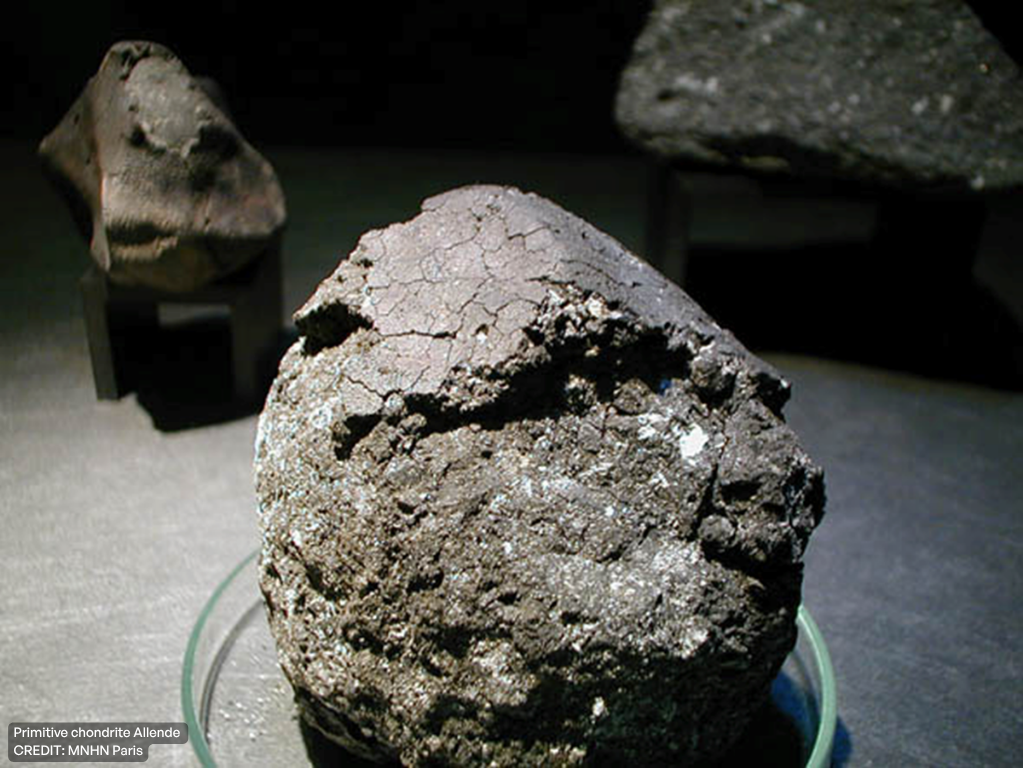
      One of the major unknowns regarding the early evolution of the solar system is how the first solids and rocks formed from the initial mixture of gas and dust inherited from the parent molecular cloud. Clues are provided by combining observations of the mineralogical, chemical, and isotopic composition of the components of primitive meteorites with astrophysical models of the accretion disk.
      enter image description here

      Speaker: Prof. Mark Chaussidon (IPGP, Paris, France)
    • 11:00 → 12:00
      Keynote Talk: Bridging Stars to Planets: Geoastronomy with Brown Dwarfs 1h A 140

      A 140

      LMU Main Building (Hauptgebäude)

      Geschwister-Scholl-Platz 1, 80539 München

      Between the highest-mass planets and lowest-mass stars, there exists a liminal population of brown dwarfs. Co-discovered with the first extrasolar planets, these objects have diverse formation channels and planetary-like atmospheres. In this talk, I describe how modern studies of brown dwarfs require deep connections between stellar and planetary science, from formation to evolution to atmospheric processes; and discuss how this science will help us to better understand the origin and evolution of our broader Milky Way.

      enter image description here

      Speaker: Prof. Adam Burgasser (UC San Diego, USA)
    • 12:00 → 13:30
      Lunch Break 1h 30m
    • 13:30 → 14:00
      Scientific Talk: Planetary surface constraints on Volcanic degassing 30m A 140

      A 140

      LMU Main Building (Hauptgebäude)

      Geschwister-Scholl-Platz 1, 80539 München

      The surface conditions of planetary bodies vary greatly. They will have a direct influence on the physics of volcanic degassing. Thus defining the physics focussed by the atmospheric target is a central task of planetary physical volcanology. We will explore the possibilities in this talk.

      Speaker: Prof. Donald Dingwell (LMU, Munich/Hangzhou International Innovation Institute)
    • 14:00 → 14:30
      Scientific Talk: The HECATE space mission. A German Helium Geocorona and Atmosphere exploration satellite 30m A 140

      A 140

      LMU Main Building (Hauptgebäude)

      Geschwister-Scholl-Platz 1, 80539 München

      HECATE is our proposal to investigate the Helium Geocorona, the highly dynamical major source of drag on spacecrafts in LEO-MEO orbits. Utilizing a high resolution UV-VIS spectrometer we plan to use the Earth as a proxy for exoplanets and answer question related to solar activity, metal enrichment and geolocial processes in the earths upper atmosphere.

      Speaker: Dr Frank Grupp (LMU and MPI-Extraterrestrial Physics, Munich)
    • 14:30 → 15:00
      Scientific Talk: Probing the subsurface of planetary objects 30m A 140

      A 140

      LMU Main Building (Hauptgebäude)

      Geschwister-Scholl-Platz 1, 80539 München

      Probing the subsurface of planetary objects is tremendously important not only to understand their evolution but also to determine structures that are relevant for future missions such as ice-bearing rocks or lava tubes on the moon. We show re-analysis of Apollo 17 data using seismic background noise that originates from thermal cracking and interferometric methods to determine near surface structure. We propose strategies for lunar exploration with autonomous sensors that use AI-based methods to determine their experimental configuration in an optimal way.

      Speaker: Prof. Heiner Igel (LMU, Munich)
    • 15:00 → 15:30
      Scientific Talk: Landscapes of other worlds: Towards mapping exoplanet atmospheres 30m A 140

      A 140

      LMU Main Building (Hauptgebäude)

      Geschwister-Scholl-Platz 1, 80539 München

      When you think about Planet Earth, you probably picture its beauty with the peaks and valleys, continents and oceans that make up the many faces of our home. Beyond Earth, all other planets of the Solar System show equally rich diversities of landscapes.
      In this talk, I will outline how attempts at mapping planets outside of the Solar System - exoplanets - are giving us glimpses into the exotic diversity within the atmospheres of these strange distant worlds.

      Speaker: Mr Cyril Gapp (LMU, Munich)
    • 15:30 → 16:30
      Closing Remarks, Coffee/Tea Break and Networking 1h A 140

      A 140

      LMU Main Building (Hauptgebäude)

      Geschwister-Scholl-Platz 1, 80539, München