Book of abstracts
Confirmed Invited Speakers
Mari Carmen BANULS (MPQ Max-Planck-Institut für Quantenoptik)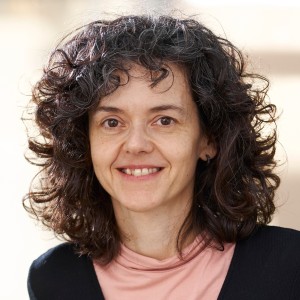
Talk Title: Tensor Networks and spectral properties of quantum many-body systems
Mari Carmen Bañuls is a research group leader in the Theory Department of the Max Planck Institute of Quantum Optics and a member of MCQST. She earned a doctorate in particle physics at the University of Valencia in 2000, then moved into computer science, completing a second doctorate in 2006. She joined the Max Planck Institute in 2005 and has led her own group since 2013. Her research develops tensor network methods to simulate complex quantum systems and study how they change over time.
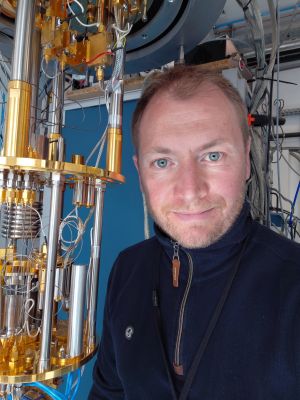 Julien BASSET (LPS Laboratoire de Physique des Solides)
Talk Title: Photoelectric detection of single microwave photons in a granular aluminum high-impedance quantum circuit
Julien Basset is an Associate Professor at Université Paris-Saclay and a researcher at the Laboratoire de Physique des Solides. His research focuses on understanding and harnessing quantum effects in nanocircuits operated at very low temperatures, with applications to quantum technologies. His recent work explores disordered superconductors, which enable a strong enhancement of light–matter interactions. In particular, this research has led to the demonstration of fast, continuous detection of individual microwave photons using circuits that combine microwave cavities with superconducting tunnel junctions
Annabelle BOHRDT (LMU Ludwig-Maximilians-Universität München)
Talk Title: Neural quantum states simulations of more realistic models for cuprate materials
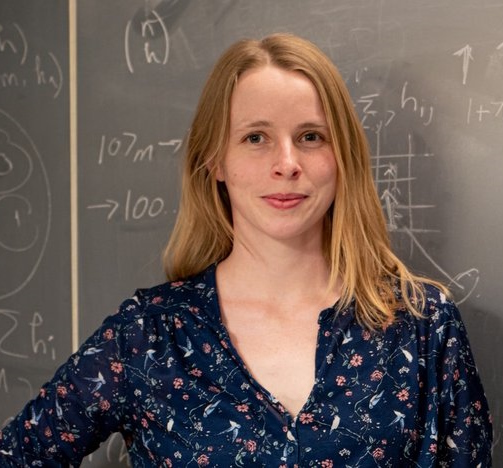 Prof. Dr. Annabelle Bohrdt is a theoretical physicist working to gain a microscopic understanding of strongly correlated quantum systems through the development of new analytical methods. In her research, she combines numerical methods, intuitive physical models, close collaboration with quantum simulation experiments, and machine learning techniques.
Annabelle earned her Ph.D. from the Technical University of Munich. During her doctoral studies, she spent two years as an exchange student in Eugene Demler’s research group at Harvard University. From 2021 to 2023, she was an independent ITAMP postdoctoral fellow at Harvard University. From 2023 to 2025, she was a professor at the University of Regensburg. Since 2025, she has been a professor of theoretical physics at Ludwig Maximilian University of Munich.
Sophie DJORDJEVIC (LNE Laboratoire national de métrologie et d’essais)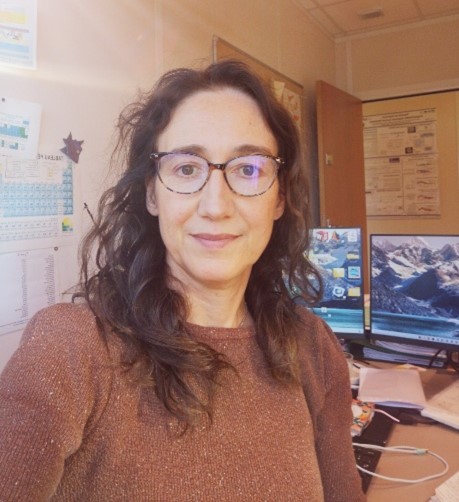
Talk Title: A primary quantum current standard based on the Josephson and the quantum Hall effects
Sophie Djordjevic is a senior-researcher in electrical quantum metrology at the Laboratoire national de métrologie et d’essais (LNE), the French National Metrology Institute. Her work focuses on the development and characterization of quantum electrical standards based on the Josephson effect and their applications to high accuracy electrical measurements. Recently, she has been involved in the development of a primary quantum current source realizing the ampere from a combination of the Josephson effect and the quantum Hall effect using a SQUID-based amplifier
Hans HUEBL (WMI Walther-Meißner-Institut)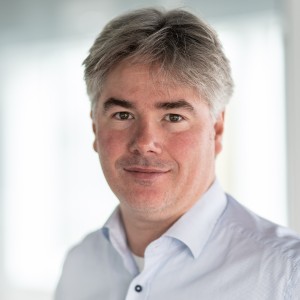
Talk Title: Squeezing Spins for Sensing: How Hybrid Quantum Systems Enable Nonclassical State Generation
Hans Hübl is a permanent staff scientist and interim scientific director at the Walther-Meißner-Institut of the Bavarian Academy of Sciences and Humanities, and an adjunct professor at the Technical University of Munich (TUM). His research focuses on engineered solid-state hybrid systems for quantum sensing, communication, and computing, as well as on spin currents and magnon transport in nanoscale magnetic devices. He received his PhD from TUM in 2007 (summa cum laude), worked as a postdoctoral researcher at the Centre for Quantum Computer Technology (CQCT) in Australia, and joined the Walther-Meißner-Institut in 2009, where he completed his Habilitation in 2014.
Barbara KRAUS (TUM School for Natural Sciencies) 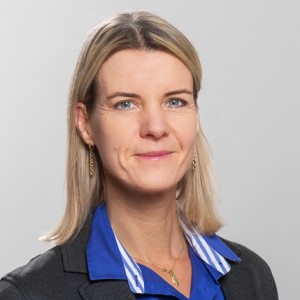
Talk Title: Quantum Cooling Algorithms for Many-Body State Preparation
Barbara Kraus is Professor of Quantum Algorithms and Applications at the Technical University of Munich and a spokesperson for MCQST. She studied mathematics and physics at the University of Innsbruck, where she earned her PhD in 2003. After research positions at the Max Planck Institute of Quantum Optics and the University of Geneva, she became a professor at Innsbruck in 2010. She joined TUM and MCQST in 2023. Her research focuses on quantum information processing, including practical applications of quantum computing and the verification of quantum devices.
Karyn LE HUR (CPHT Centre de physique théorique)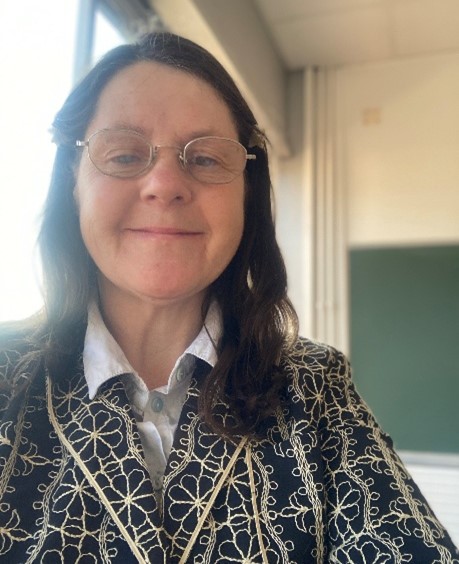
Talk Title: Insight on topological phases
Karyn Le Hur, theoritical physicist with applications in condensed-matter and quantum physics. Since 2012 permanent CNRS research director at CPHT Ecole Polytechnique, member of admission Jury Ecole Polytechnique Filieres PSI and PC since 2025. I grew up in Nantes and came to ENS Paris in 1994 for studies in theorical physics. PhD thesis in LPS Orsay 1998 supervisor Bernard Coqblin; 1998-2000 post-doctoral fellow at ETH Zurich with T. Maurice Rice; 2000-2002 6 years position in Geneva, group Markus Buettiker; 2002-2006 assistant and tenure associate professor at Sherbrooke University in Canada and 2006-2012, associate professor at Yale University; 2012-2025 professeure chargee de cours at Ecole Polytechnique.
Valentina PARIGI (LKB Laboratoire Kastler Brossel)
Talk Title: Continuous Variable entangled networks for quantum information protocols
Valentina Parigi is a Professor at the Laboratoire Kastler Brossel at Sorbonne Université in Paris. She works in photonic quantum technologies within the continuous-variable (CV) framework. Her research focuses on the implementation of large CV-entangled Gaussian and non-Gaussian networks and their application in quantum information protocols.
Yoann PIETRI (LIP6 Laboratoire d’informatique de Sorbonne
Université)
Talk Title: Towards integrated and field-ready continuous-variable quantum key distribution systems.
Yoann Piétri is an Associate Professor at Sorbonne Université and LIP6 laboratory. After a PhD on quantum communication in Sorbonne Université, and a post-doctoral contract at the university of Padova on the same topic, he joined the Quantum Information team of the LIP6 laboratory of Sorbonne Université and CNRS as an Associate professor in 2025. His research focus on quantum communication, photonic integration, quantum networks, energetics of quantum communication and interfaces between quantum computing and quantum communication.
Philipp PREISS (MPQ Max-Planck-Institut für Quantenoptik)
Talk Title: Quantum Gas Microscopy of Ground-State Phases in the Fermi–Hubbard Model
Philipp Preiss is a research group leader at the Max Planck Institute of Quantum Optics and a member of MCQST. He earned his PhD at Harvard University, working with Markus Greiner on quantum gas microscopy. From 2016 to 2021, he conducted postdoctoral research at Heidelberg University before joining the Max Planck Institute in Garching. His Atomic Quantum Matter group studies ultracold atoms, using tools that allow researchers to arrange and observe individual particles to investigate quantum many-body systems.
Clément SAYRIN (LKB Laboratoire Kastler Brossel)
Talk Title: Hybrid Rydberg platform for the observation of long-lived spin-exchange interactions
Clément Sayrin is an associate professor in Sorbonne University and Laboratoire Kastler Brossel, in Paris. After a PhD in LKB on Cavity Quantum Electrodyamics with Michel Brune and a postdoctoral fellowship in Vienna with Arno Rauschenbeutel, he joined the Rydberg Atoms team of LKB in 2015. He works on the manipulation and trapping of individual circular Rydberg atoms for the development of a quantum simulator. He is a member of Institut Universitaire de France.
Harald WEINFURTER (LMU Ludwig-Maximilians-Universität München)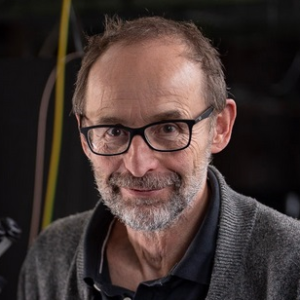
Talk Title: A Quantum Link
Harald Weinfurter is Professor of Experimental Quantum Physics at LMU Munich and a member of MCQST. He studied technical physics at TU Wien, where he earned his PhD. After research positions in Berlin and Innsbruck, he completed his habilitation at the University of Innsbruck and joined LMU in 1999. His research spans quantum optics and quantum information, from experiments on entanglement and the foundations of quantum physics to quantum communication.
Contributed Talks
[QInfo] Adrien BOUSCAL: A cavity-coupled Rydberg array for error-corrected quantum computing
[QSens] Purmendu DAS: Altermagnetic Hubbard Model in the Strongly Correlated Regime
[QSens] Pierre EBERSCHWEILER: AQuRA, a prototype industrial transportable optical clock
[QInfo] Kyrylo GERASHCHENKO: Experimental realization of a cos(2φ) transmon qubitt
[QMatter] Alicia NEGRE: An extended approach of quantum embedding methods in Density Matrix Embedding Theory
[QMatter] Fabian PICHLER: Chiral superconductivity, topological crystals, and fractional Chern insulators in interacting Chern bands
[QNetworks] Thomas POUSSET: Digital signal processing in both coherent and direct detection
[QNetworks] Kilian SANDHOLZER: Erbium-doped silicon nanophotonics as a platform for integrated quantum network devices
[QSim] Monalisa SINGH ROY: Entanglement diagnostics of stochastic-resetting steady states: theory and measurement on superconducting qubits
[EmergDir] Vitaly WIRTHL: Probing the Standard Model with atomic hydrogen: current status and advances from THz spectroscopy of circular Rydberg states
[QSim] Ke XIE: Direct observation of 3D Anderson transition with ultracold atoms